
Ready to see what Base44 can do for you? Get started →
App development statistics in 2026 show a clear shift: AI-powered tools, faster workflows and accessible platforms are redefining how apps are built, and with platforms like Base44 and other AI app builder, that shift is already happening in real time.
App development is evolving faster than ever. AI-assisted coding, automation and modern app builders are reshaping how products go from idea to launch, and businesses are adopting these tools at record speed.
This report breaks down the latest data across industry growth, AI adoption, developer behavior, security risks and future trends, so you can understand where app development stands today and where it’s heading next.
TL;DR: app development statistics
App development is becoming faster, more accessible and more AI-driven, while still requiring human oversight for quality, security and strategy.
Key takeaways:
- AI app development reached 84% among developers, while 46% don’t fully trust AI-generated code (Stack Overflow)
- Global app spending hit $41B in Q2 2025 (Statista)
- Low-code/no-code tools power 62% of new app projects (Zebracat)
- Developers saw 5.5% productivity gains using AI tools (Cornell University)
- Generative AI apps reached 1.7B downloads and $1.9B revenue in H1 2025 (Sensor Tower)
| Category | Key statistic | What it means |
|---|---|---|
| Industry growth | $41B app spending in Q2 2025 | Demand for apps continues to grow rapidly |
| Market outlook | $1.2T projected market by 2035 | Long-term opportunity for app builders |
| AI adoption | 84% of developers use or plan to use AI | AI is now standard in development workflows |
| Developer productivity | +5.5% productivity with AI tools | Teams can build faster with fewer bottlenecks |
| AI in coding | Up to 30% of Python code is AI-generated | AI is actively shaping how code is written |
| Developer concerns | 46% don’t fully trust AI-generated code | Human oversight is still essential |
| Developer ecosystem | 180M+ developers globally | The builder economy is rapidly expanding |
| Security risks | $4.4M average breach cost | Security must be built in from day one |
| Low-code adoption | 62% of apps use low/no-code tools | App development is becoming more accessible |
App development statistics: key trends shaping 2026
The data reveals a clear pattern: AI is accelerating development, workflows are becoming more efficient and collaborative and app building is more accessible than ever.
Jump to a section:
- App development industry statistics
- Developer ecosystem statistics
- Developer productivity trends
- AI in app development
- AI adoption vs. AI trust
- App security statistics
- The future of app development
01. App development industry statistics
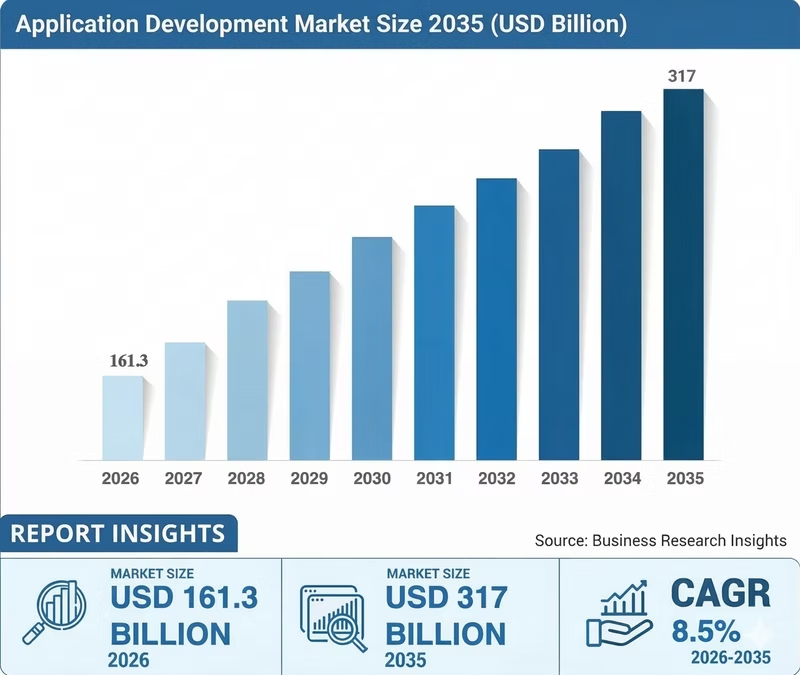
Source: Business Research Insights
App development is no longer just a technical function, it’s a core driver of business growth.
Market data shows the global application development industry is on track to reach well over $150 billion in 2025, while the broader mobile app economy is projected to surpass $1.2 trillion by 2035. At the same time, consumer demand remains strong, with tens of billions spent on apps in a single quarter.
Mobile usage continues to dominate digital behavior, with users spending the vast majority of their mobile time inside apps rather than browsers.
What this means:
- Apps are central to customer engagement and revenue
- Businesses are investing heavily in digital products
- Speed and scalability are now competitive advantages
02. Developer ecosystem statistics
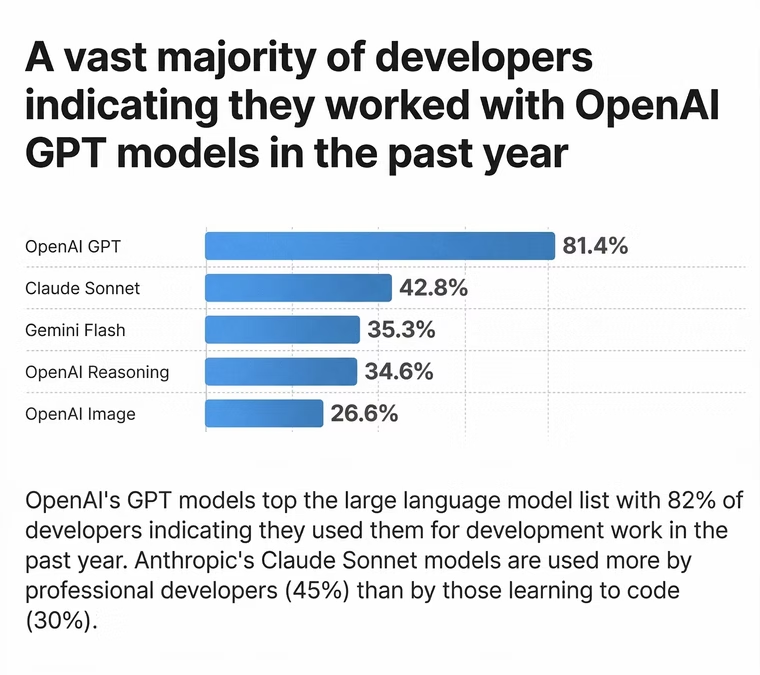
Source: Stack Overflow
The developer ecosystem is expanding rapidly, and becoming more global, collaborative and accessible.
Recent survey data shows developers now span nearly every country worldwide, reflecting how software development has become a truly global discipline. At the same time, the number of developers continues to grow at record pace, with tens of millions joining platforms like GitHub in a single year.
Activity is also accelerating:
- Hundreds of repositories are created every minute
- Contributions and commits are reaching record highs
- Open-source collaboration is more active than ever
Developers are also continuously learning, with the majority relying on online resources, documentation and courses to stay current in a fast-moving field.
What this means:
- Innovation is happening globally and in real time
- Collaboration is driving faster development cycles
- Continuous learning is now a core part of being a developer
03. Developer productivity trends
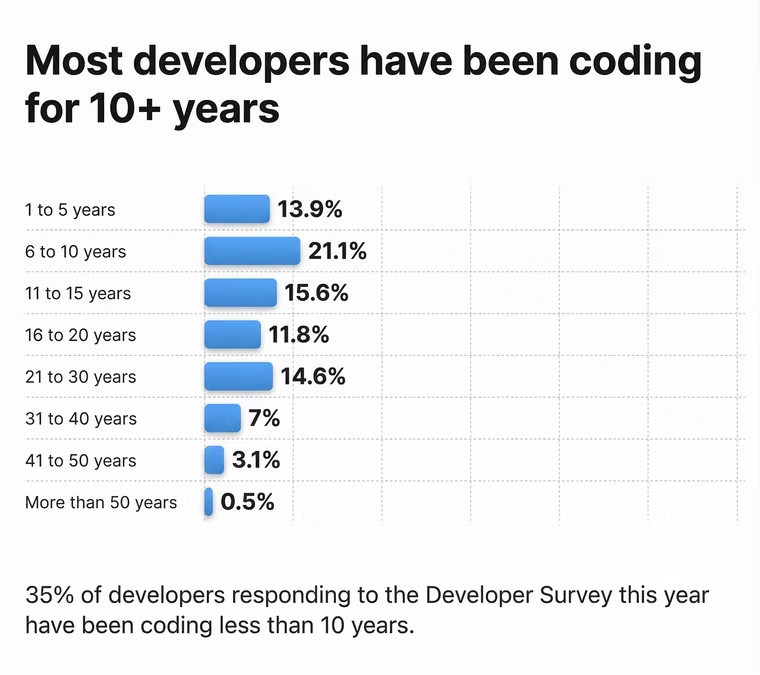
Source: Stack Overflow
Developer productivity is shifting from writing more code to building smarter systems.
Industry research shows that AI-assisted development is improving efficiency, with measurable productivity gains and faster task completion across teams.
Developers are spending less time on repetitive coding and more time on higher-value work like architecture, system design and product decisions.
High-performing teams are also deploying code more frequently than ever, often multiple times per day, reflecting a move toward continuous delivery and rapid iteration.
What this means:
- Developers focus more on problem-solving than manual coding
- Teams iterate faster and ship updates more frequently
- Productivity is now defined by impact, not output
04. AI in app development
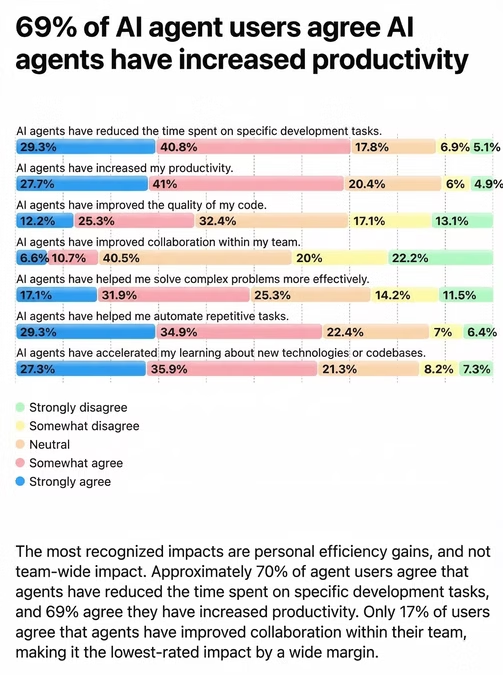
Source: Stack Overflow
Artificial intelligence is reshaping how apps get built. Survey data indicates that 84% of developers are now using or planning to use AI tools in their workflows, underscoring how integrated AI assistance has become in coding, debugging and automation tasks.
Adoption has surged in the past year, with the vast majority of developers now using or planning to use AI tools in their workflows. At the same time, demand for AI-powered apps is growing rapidly, with billions of downloads and significant revenue being generated in a short period.
AI is also directly influencing how code is written, with a growing percentage of code being generated or assisted by AI tools.
What this means:
- AI is speeding up development from idea to launch
- Developers are shifting toward higher-level work
- Building apps is becoming more accessible to a wider audience
"AI acts like a boost, almost like steroids, helping us speed up tasks that we thought would take much longer. In general, I believe we’re now in a phase where AI is becoming more practical and less about flashy, experimental uses. In the areas I’m focused on, particularly visual design, it started out as very 'new-agey'—creating fun, imaginative things like superheroes doing crazy stuff or other wild and creative visuals. That was entertaining and mind-opening, but now I believe we’re moving to a stage where AI is truly practical. It’s about achieving real, objective results that I actually want to accomplish." - Ido Kosover, Head of Media at Wix
Explore the best AI app building tools →
05. AI adoption vs. AI trust
Source: Stack Overflow
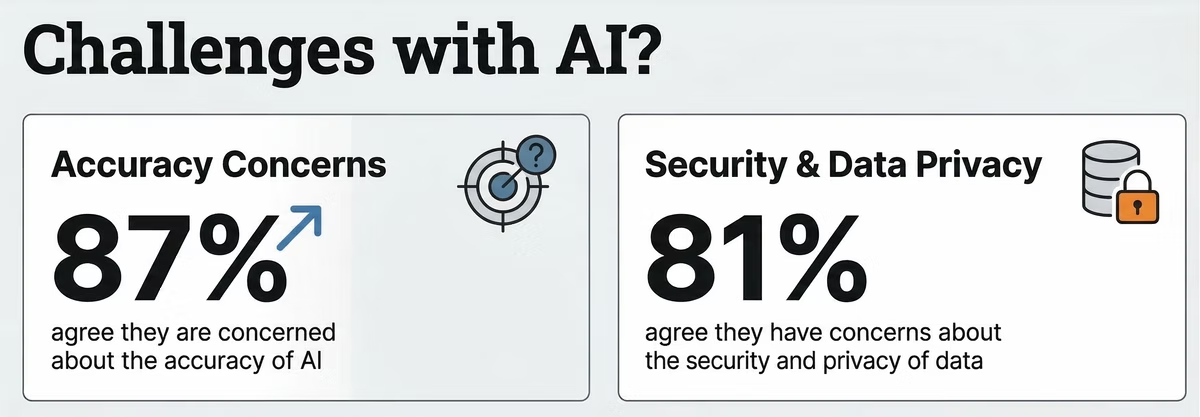
Despite strong adoption rates, trust in AI-generated output remains cautious.
87% of developers express concerns about the accuracy and reliability of AI-generated code, particularly around correctness and security implications. Further survey findings indicate that only a small percentage of developers fully trust AI output without manual review, reinforcing the importance of human oversight in production workflows.
AI can dramatically increase speed, but human oversight is still essential to ensure quality and correctness.
Bottom line: AI is a powerful assistant, but not a replacement for developers.
Learn more: What is a no-code AI app builder?
06. App security statistics
Source: IBM Report
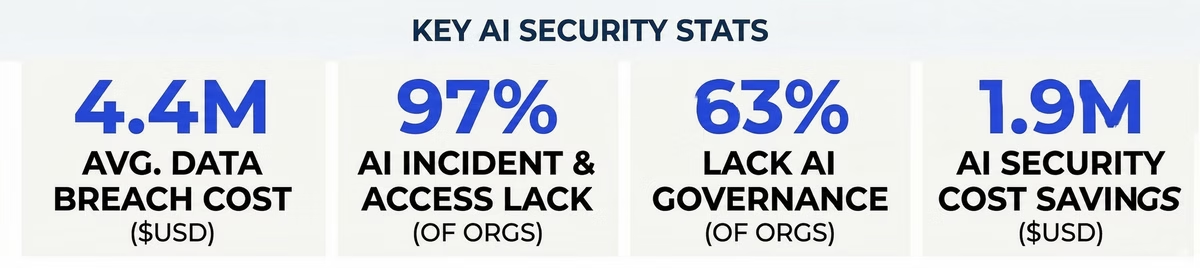
As development speeds increase, security risks grow alongside them.
The average global cost of a data breach reached $4.4 million in 2025, highlighting the financial impact of security gaps, even as detection and response times improve.
At the same time, application-layer attacks are continuing to rise, making proactive security a critical part of modern development workflows.
Key security priorities:
- Secure infrastructure and encryption
- Continuous monitoring and updates
- Strong authentication systems
- Hardened CI/CD pipelines
Security is no longer a final step, it’s built into every stage of modern app development.
Learn more:
App retention and abandonment statistics
Building an app is only half the challenge, keeping people using it is the other half. Close to half of all apps get uninstalled within their first 30 days, and only about a quarter to a third of new users return the day after installing. Most of that drop-off traces back to slow load times, confusing onboarding or an app that doesn't clearly show its value fast enough. Retention isn't a marketing afterthought, it's a development priority from day one.
What this means: Build for the first session, not just the launch.
07. The future of app development
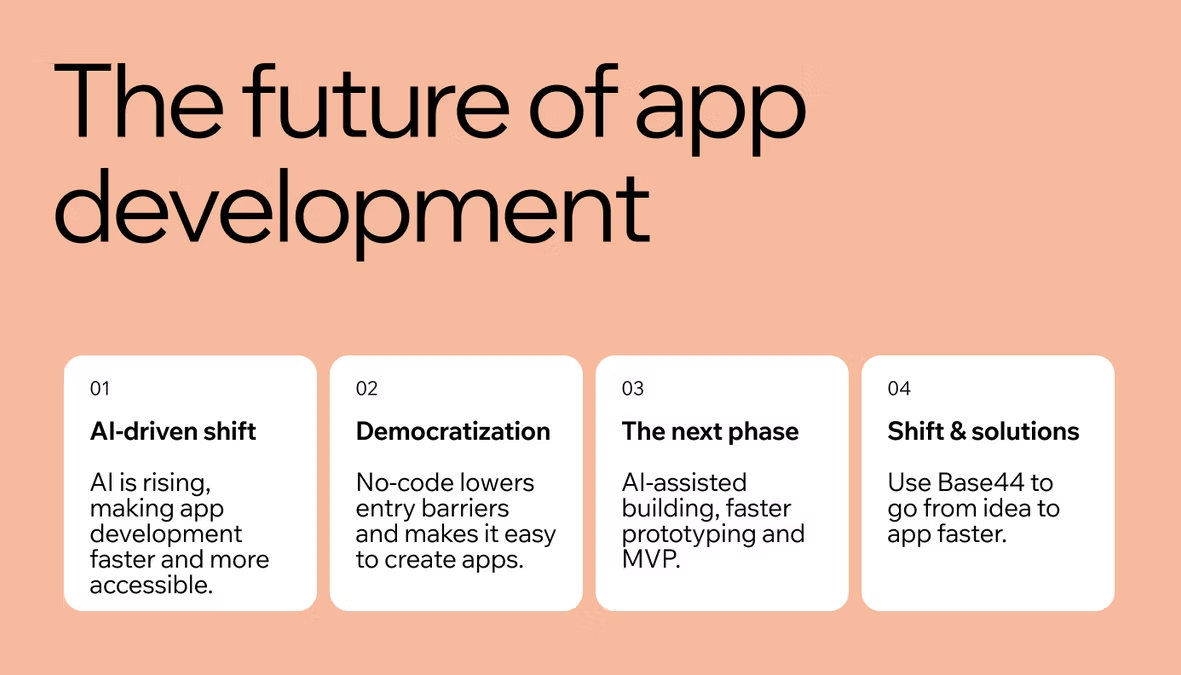
The data points to a clear shift: development is becoming faster, more accessible and increasingly AI-driven, but still guided by human strategy.
AI adoption is rising, developer communities are growing and low-code tools are lowering barriers to entry. At the same time, demand for developers continues to outpace supply, accelerating the need for more efficient tools and workflows.
App development is also expanding beyond professionals. A growing number of people are using AI tools to build apps for work, school and personal projects.
What defines the next phase:
- AI-assisted app building
- Faster prototyping and MVP cycles
- Low-code and no-code adoption
- Automation-first workflows
- Security-first development
The biggest shift isn’t just technical, it’s strategic.
Teams are moving from asking “How do we build this?” to “How fast can we launch, test and improve this?”
This is where platforms like Base44 come in, helping teams move from idea to functional app faster through AI-powered workflows, while maintaining control over UX, logic and strategy.
Explore app development guides:
- Business intelligence app development
- UX design and app development
- CRM app development
- Healthcare app development
- Wellness app development
- Recruitment app development
- Retail app development
How Base44 fits into the future of app development
Base44 is an AI vibe coding platform that lets anyone build and ship production-ready apps, websites and agents without writing code.

The data makes one thing clear: app development is getting faster, more automated and more accessible, but it still requires structure, control and thoughtful execution.
This is where platforms like Base44 come in.
As AI adoption continues to grow, developers and non-developers alike are looking for ways to move from idea to working product faster, without getting stuck in complex setup, infrastructure or repetitive coding tasks. At the same time, the need for flexibility, customization and strong user experience hasn’t gone away.
Base44 sits at the intersection of these needs.
It combines AI-assisted app building with visual development tools, allowing you to generate functional apps quickly and then refine them using intuitive, drag-and-drop controls. This hybrid approach reflects where the industry is heading, faster creation, paired with human control over logic, design and experience.
In a landscape where:
- AI is generating code
- Low-code tools are lowering barriers
- And demand for apps continues to grow
The advantage isn’t just building, it’s building quickly, iterating often and maintaining control over the final product.
That’s the shift Base44 is designed to support.
“Base44 isn’t just a shortcut for beginners, it’s a power tool for experts. Even seasoned developers use it to rapidly test ideas, automate boilerplate code and get a head start on complex projects. The value is in speed and focus, not in cutting corners.” - Nina Boyd, PMM at Base44
Editor’s note: This article is based on the most recent data available as of March 19, 2026 from independent industry research and developer surveys.
App development statistics FAQ
What are the most important app development statistics?
AI adoption is at 84%, app spending reached $41B in a single quarter, and low-code tools now power over 60% of new projects, highlighting a shift toward faster, more accessible development.
How is AI changing app development?
AI is reducing repetitive coding, improving productivity and enabling faster prototyping, allowing developers to focus on higher-value work.
Learn more about AI:
What does the future of app development look like?
Faster, more accessible and AI-driven, but still dependent on human strategy, collaboration and quality control.
Do developers trust AI-generated code?
Not entirely, many developers still have concerns about accuracy and reliability, making human oversight essential.
What are the biggest risks in app development?
Security remains a major challenge, with data breaches costing millions on average and application-layer attacks continuing to rise.