Launch your app faster with Base44. Start now →

Understanding the difference between vibe coding and traditional coding helps you pick the exact right path to bring your app idea to life. Vibe coding relies on AI and plain language to generate software or apps, while traditional coding involves writing specific syntax by hand to build the same. Both methods offer unique benefits for creating apps.
Knowing which approach fits your project can save you valuable time and resources. You can move from a simple idea to a working app much faster when you use the best tools for your specific goals. We'll explore how these two methods compare and how you can use them to build something amazing.
What is vibe coding?
This is the one everyone is talking about so let's start with that. Vibe coding is the process of building software by talking to an AI model in plain language. Instead of memorizing complex programming syntax, you describe exactly what you want your app to do. The AI then writes the underlying code for you and you act as the director, guiding the output based on how the app feels and functions.
In app development, this means you can ask an AI to create a login screen, set up a database or build a user profile page just by typing out the instructions. You adjust the app by telling the AI to change colors, move buttons or fix errors. Popular AI app builders like Base44, allow you to build working applications quickly without typing manual syntax.
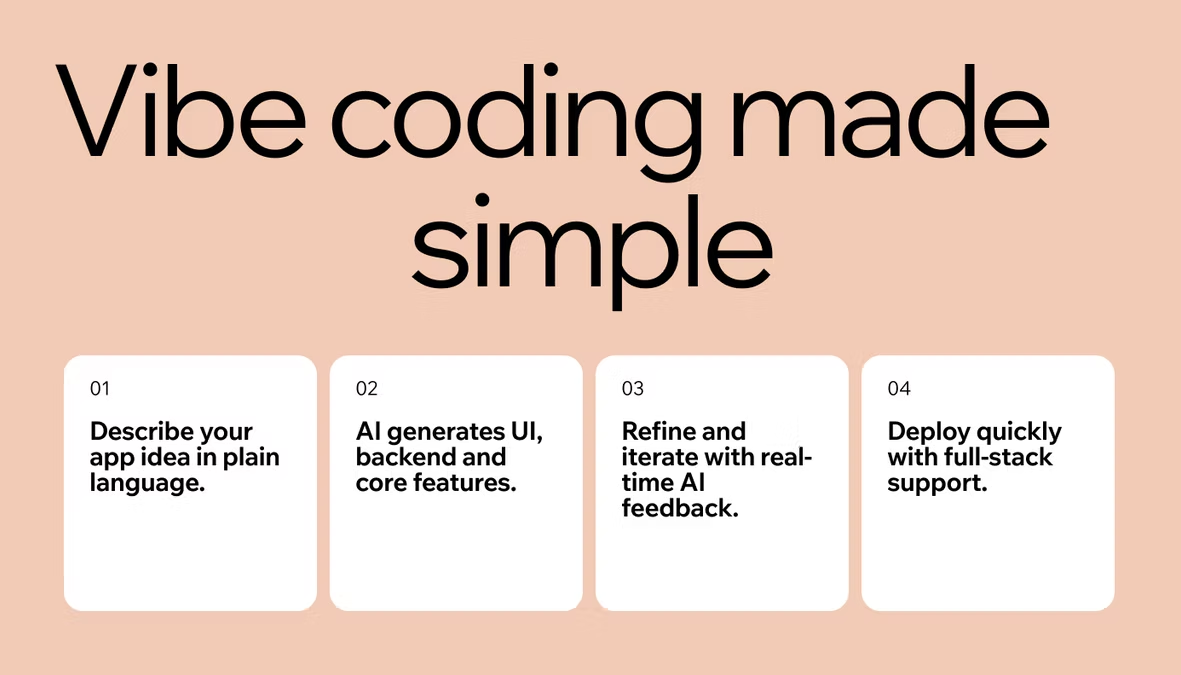
How does vibe coding work? Vibe coding lets you focus on the vision instead of the mechanics, giving anyone the power to build.
What is traditional coding?
Traditional coding involves writing explicit instructions for a computer using a specific programming language. You build every part of the application by hand, defining exactly how data moves, how screens load, and how buttons react when pressed. This method gives you total control over every single detail of your project.
To build an app this way, you need a strong grasp of logic, algorithms, and syntax. Developers spend months or years mastering mobile app frameworks to build native experiences. For example, if you want to create an iOS app, you typically write in Swift and for Android, you write in Kotlin. If you want to build for both platforms at once, you might use React Native or Flutter.
Main differences between vibe coding and traditional coding
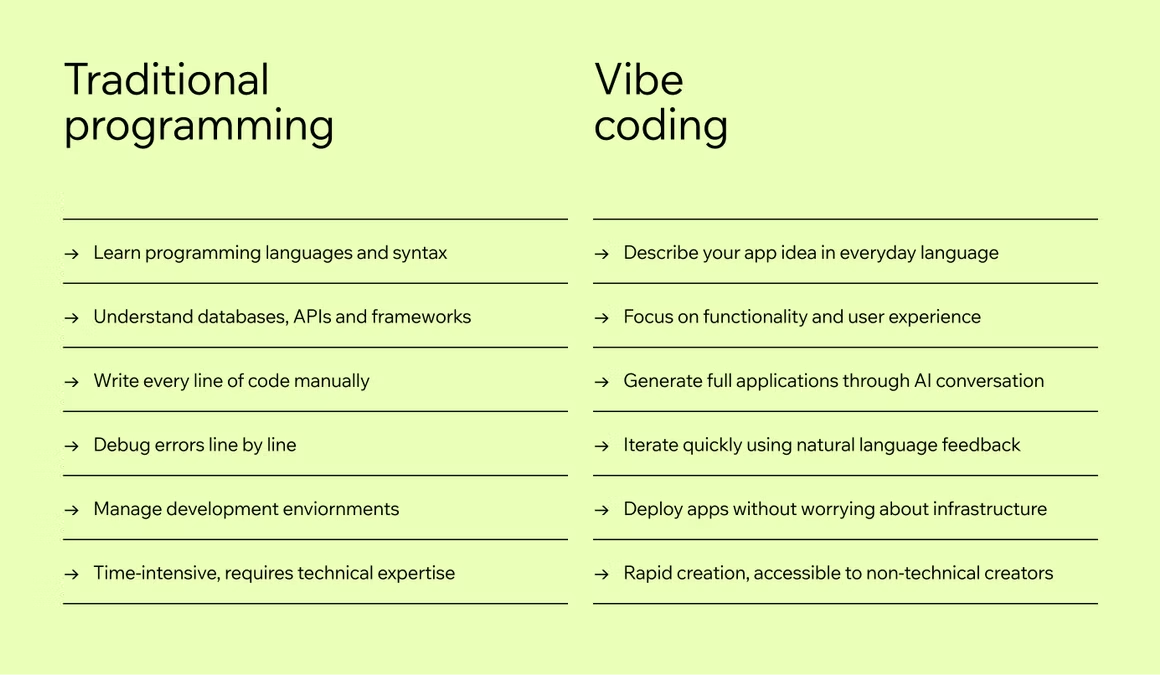
Choosing between these two approaches comes down to what you prioritize for your app and your own technical knowledge or lack of. Here's a quick breakdown of how they compare across important areas:
- Ease of use: Vibe coding is highly accessible and requires very little specialized programming knowledge. Traditional coding has a steep learning curve and demands deep logical thinking.
- Speed of development: You can spin up a working prototype in hours with vibe coding. Traditional coding often takes weeks or months to reach the same stage.
- Scalability: Traditional coding offers total control, making it easier to handle massive user growth and complex data. Vibe coding can sometimes result in messy structures that are harder to expand.
- Maintenance: Fixing a traditional app means reading through well-documented files. Maintaining a vibe-coded app can get tricky if the AI generated complicated logic that you do not fully understand.
- Security: Traditional coding puts security entirely in the developer's hands, audits, secure coding practices, and compliance checks all have to be built in deliberately. Vibe coding can skip this if the AI isn't prompted to think about it, which is why a platform like Base44 that scans and secures what it generates automatically matters more than it might seem at first.
- Flexibility: Traditional developers can build literally anything the hardware allows. Vibe coding is sometimes limited by the training data of the AI model you use.
Base44 is a no-code app builder that manages backend logic, data management and security review automatically as part of every build.
Learn more: Why does vibe coding get a bad rap?
When to use vibe coding vs traditional coding
Vibe coding works beautifully when you want to move fast. If you have a brilliant idea for a local delivery app and want to test it this weekend, talking to an AI is your best bet. It is perfect for rapid prototyping, internal business tools and creators who want to validate their concepts before spending thousands of dollars. This is ultimately one of the main benefits of vibe coding.
Learn more about how to get started with vibe coding.
Traditional coding is the better choice when you are building something highly complex. If you are developing a secure banking app, a high-performance 3D game or a platform expected to host millions of concurrent users, you need the precision of manual engineering. Traditional methods ensure your app runs efficiently and meets strict security standards.
Can vibe coding and traditional coding work together?
Yes, its possible to use both if you need to and know how. You can use vibe coding to sprint through the initial stages of your app. This is because AI can quickly generate your boilerplate logic, design simple screens, and set up basic databases. Once you build a working app prototype and real users start testing it, you can transition to traditional coding if you need, it isn't always needed especially if you're building with an AI app builder like Base44. A human developer can step in to clean up the architecture, secure the data, and prepare the app for agile scaling.
A strong app often starts with a vibe and matures with traditional engineering and you get the speed of AI combined with the reliability of a human expert.