TalentHub
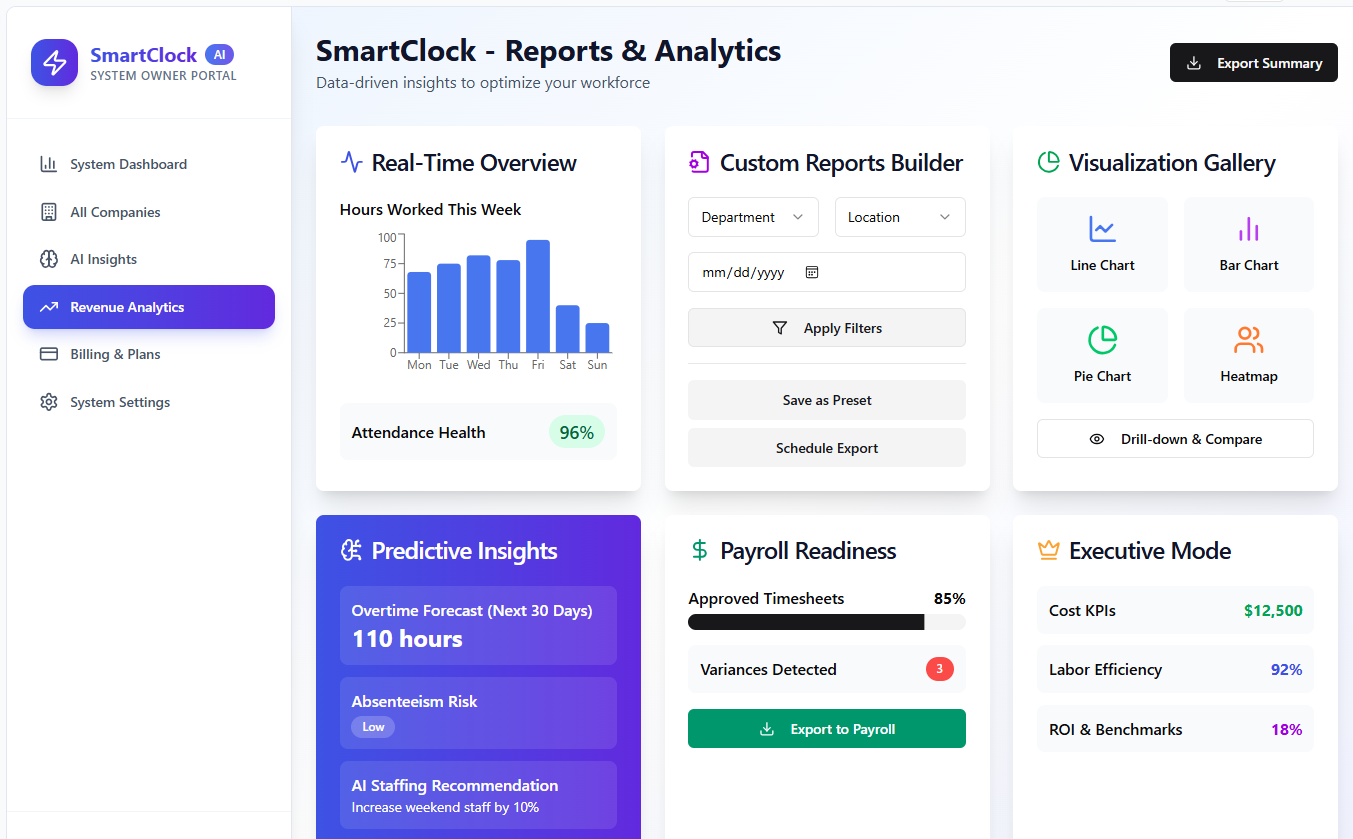
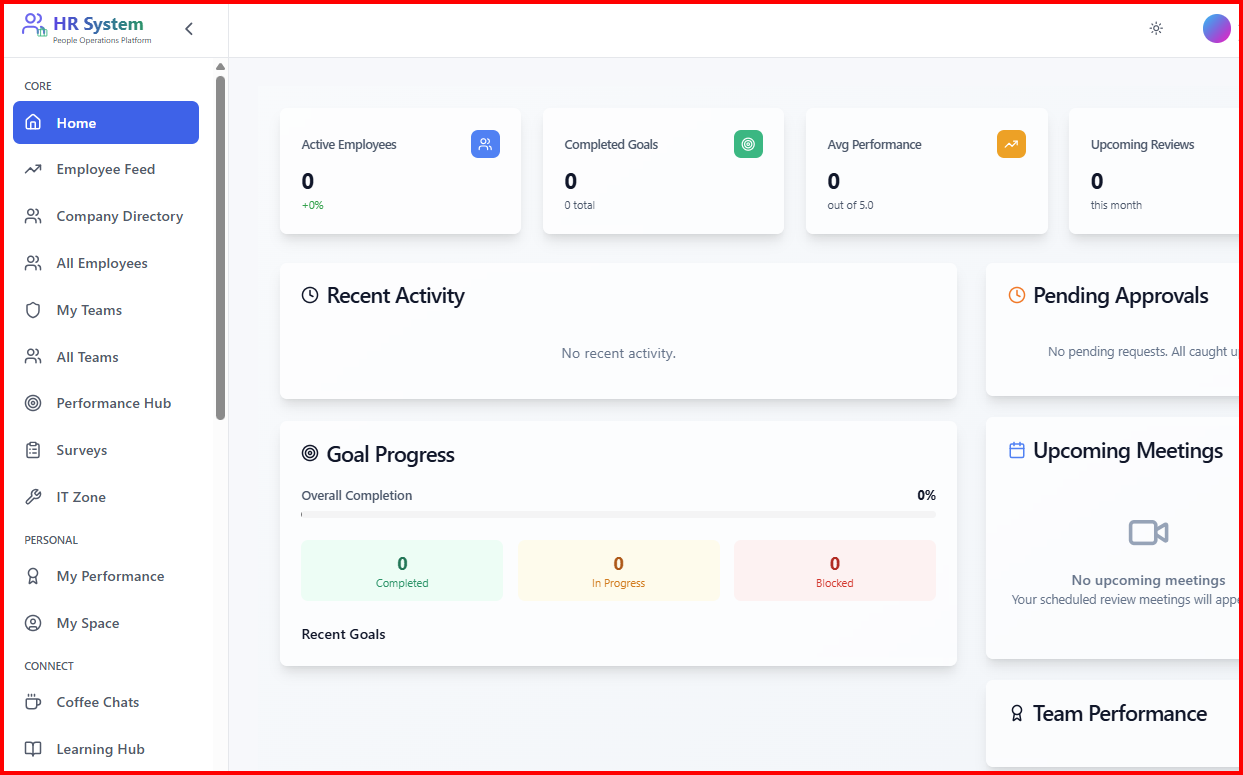
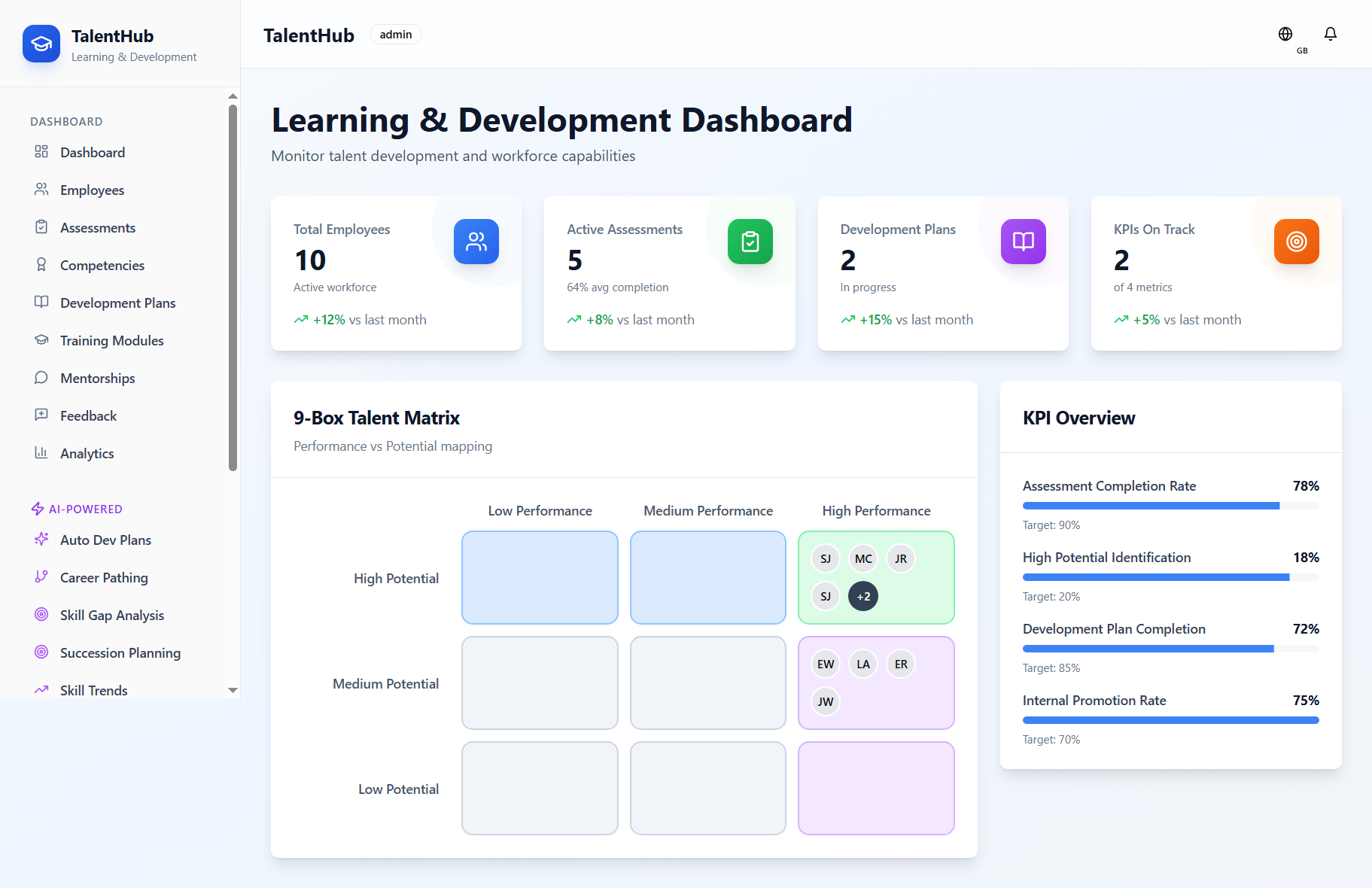
$299.99An intelligent platform for optimizing talent development, assessment, and strategic workforce planning. The TalentHub platform is a comprehensive, AI-powered Learning & Development (L&D) ecosystem designed to automate and enhance the role of an L&D Business Partner. It provides a robust set of tools and intelligent insights across various L&D functions. I. Core L&D Functionality Employee Profiles : Stores essential employee data, including department, role, hire date, performance scores, and potential ratings. Benefits : Centralized employee data for HR and L&D; enables personalized development and analysis. Assessment Management : Creates, manages, and tracks various types of employee assessments (e.g., Psychometric, Skills, Leadership, 360 Feedback). Benefits : Standardized evaluation of employee capabilities; identifies strengths and areas for development. Competency Frameworks : Defines organizational competencies with categories, descriptions, applicable roles, and behavioral indicators. Benefits : Establishes clear skill expectations; guides development efforts and career progression. Development Plans : Facilitates the creation, tracking, and management of individual development plans for employees. Benefits : Structured approach to employee growth; ensures targeted skill enhancement. Training Modules : Manages training content, including AI-generated modules, quizzes, and recommended resources. Benefits : Flexible and accessible learning resources; customizable content creation. Mentorship Hub : Manages mentorship relationships, including goal setting and session logging. Benefits : Fosters knowledge transfer and skill development through peer and senior guidance. Feedback Management : Collects and organizes feedback (Peer, Manager, Self, 360) with categories and detailed insights. Benefits : Provides constructive insights for employee growth; promotes a culture of continuous improvement. KPI Tracking : Monitors key L&D metrics across engagement, completion, performance, and retention. Benefits : Measures the effectiveness and impact of L&D initiatives; supports data-driven decision-making. Analytics Dashboards : Visualizes L&D data through charts and graphs. Benefits : Provides insights into workforce capabilities, development progress, and program effectiveness. II. AI-Powered Strategic Capabilities AI-Generated Training Modules : Creates custom training content, quizzes, and feedback mechanisms on demand using AI. Benefits : Rapid content creation; ensures relevance and personalization of learning materials. AI-Assisted Competency Definition (Competency Management) : Uses AI to analyze market trends and suggest updates to the competency framework, including emerging skills and those to phase out. Benefits : Keeps the organization's skill framework future-proof; ensures alignment with industry demands. Automated Development Plans : Generates personalized development plans for employees based on their profiles, assessment results, and available resources. Benefits : Saves time for L&D and managers; provides tailored, actionable growth paths. AI Career Pathing : Analyzes employee data to suggest personalized internal career progression paths, including target roles, required competencies, and development roadmaps. Benefits : Empowers employees with clear growth visibility; aids talent retention by showcasing internal opportunities. AI-Powered Skill Gap Visualization : Identifies and visualizes skill gaps across departments and roles, highlighting areas of strength and weakness. Benefits : Strategic workforce planning; targeted training interventions. L&D Initiative ROI Prediction : Predicts the return on investment for proposed training programs, including financial returns, KPI impacts, and risk assessments. Benefits : Enables data-driven budgeting and resource allocation; demonstrates the business impact of L&D. Natural Language Analytics : Allows users to query L&D data using plain English and receive answers, insights, and visualizations. Benefits : Makes complex analytics accessible to non-technical users; speeds up insight generation. Predictive Talent Retention (Flight Risk Analysis) : Identifies employees at risk of leaving the organization and suggests proactive interventions. (Accessible via Manager Dashboard and dedicated FlightRisk page) Benefits : Proactive talent management; reduces turnover costs. AI for Strategic Workforce Planning : Generates comprehensive strategic workforce plans based on current data and future needs. Benefits : Ensures organizational readiness for future challenges; optimizes talent deployment. AI Chatbot (AIAssistant) : Provides an interactive AI assistant for employee L&D support. Benefits : Instant support and guidance for employees; frees up L&D staff for strategic tasks. AI-Powered Mentorship Matching : Enhances mentor-mentee matching by analyzing skills, development areas, and career goals for optimal compatibility. Benefits : Maximizes the effectiveness of mentorship programs. III. Engagement & Operational Excellence Gamification System : Awards points, levels, and badges for learning activities and achievements. Benefits : Boosts employee engagement and motivation; encourages continuous learning. Smart Notifications : Proactive alerts for development plan deadlines, assessment due dates, and other critical L&D events. Benefits : Keeps employees and managers informed; ensures timely completion of tasks. HRIS/LMS Integration Capabilities : Provides tools for importing and exporting data, ensuring compatibility with existing HR and learning systems. Benefits : Streamlined data flow; reduces manual effort and data inconsistencies. Succession Planning : AI-powered tool for identifying potential successors for critical roles and planning their development. Benefits : Ensures leadership continuity; mitigates risks associated with key role vacancies. Skill Trend Analysis : Analyzes internal and external data to identify trending skills and potential gaps. Benefits : Informs curriculum development; keeps the workforce competitive. IV. Enterprise-Grade Foundation Granular User Roles & Permissions : Supports roles like L&D Administrator, Department Manager, HR Business Partner, and Employee with tailored access. Benefits : Enhanced security and data privacy; ensures users only access relevant information and functionalities. Multi-Language Support : Supports multiple languages, including right-to-left (RTL) for Arabic. Benefits : Improves accessibility and inclusivity for a diverse global workforce. Responsive Design : The entire application is built to be responsive, providing a consistent experience across desktop and mobile devices. Benefits : Accessibility and usability for all users, regardless of their device. In summary, TalentHub is a powerful, intelligent platform that not only streamlines traditional L&D processes but also leverages advanced AI to provide predictive insights, personalized development, and strategic workforce capabilities, significantly enhancing an organization's talent development efforts. Here's a comprehensive overview of TalentHub's features, functions, and use cases: I. Core L&D Management Employee Management ( /employees ) : Features : View, add, and manage employee profiles including personal details, department, role, hire date, performance scores, potential ratings, and promotion readiness. Functions : Centralized employee data management for HR and L&D administrators. Use Cases : Maintaining an up-to-date employee directory, tracking key HR metrics. Assessment Management ( /assessments ) : Features : Create, publish, and manage various types of assessments (psychometric, skills, leadership). Track completion rates and due dates. Functions : Designing and deploying evaluation tools for skill identification and performance measurement. Use Cases : Pre-employment screening, identifying skill gaps, leadership development. Competency Management ( /competency-management ) : Features : Define and manage organizational competencies, categorize them, specify applicable roles, and outline behavioral indicators for different proficiency levels. Functions : Establishing a clear framework for skills and behaviors required across the organization. Use Cases : Skill gap analysis, aligning training with business needs, career pathing. Development Plans ( /development-plans ) : Features : Create, track, and manage individualized development plans for employees, including focus areas, learning activities, and target completion dates. Functions : Tailoring growth opportunities to individual employee needs. Use Cases : Employee growth, performance improvement, succession planning. Training Modules ( /training-modules ) : Features : Browse, access, and manage a library of training modules, categorized by difficulty, competency, and duration. Functions : Delivering structured learning content. Use Cases : Onboarding, continuous learning, skill development. Mentorship Hub ( /mentorship-hub ) : Features : Facilitate and manage mentorship programs. AI-powered mentor matching, session logging, and tracking of mentor-mentee interactions and goals. Functions : Connecting employees for guided development and knowledge transfer. Use Cases : Skill transfer, career guidance, leadership development. Feedback Management ( /feedback-management ) : Features : Collect and manage various types of feedback (peer, manager, self, 360), track strengths, areas for improvement, and detailed feedback. Functions : Providing constructive input for employee growth. Use Cases : Performance reviews, behavioral coaching, developmental insights. II. AI-Powered Insights & Automation AI L&D Assistant ( /ai-assistant ) : Features : An interactive AI chatbot for personalized guidance on learning and development, accessible via the web interface and WhatsApp. Manages conversations and provides real-time assistance. Functions : On-demand AI coaching and resource discovery. Use Cases : Answering L&D questions, suggesting learning paths, providing quick insights. Automated Development Plans ( /automated-development-plans ) : Features : AI-driven generation of development plans based on employee profiles, assessment results, and organizational needs. Functions : Streamlining the creation of personalized growth strategies. Use Cases : Scaling personalized development across the workforce, reducing administrative burden. Career Pathing ( /career-pathing ) : Features : AI analyzes employee data (performance, skills, assessments) to suggest potential internal career paths, including required competencies and development roadmaps. Functions : Guiding employees through internal mobility and growth opportunities. Use Cases : Employee retention, talent mobility, internal hiring. Skill Gap Analysis ( /skill-gap-visualization ) : Features : Visual representation and analysis of skill gaps at individual, team, and organizational levels, powered by AI. Functions : Identifying critical skill deficits and areas for targeted training. Use Cases : Workforce planning, training needs analysis. Succession Planning ( /succession-planning ) : Features : AI-assisted identification of potential successors for critical roles, evaluating readiness, development gaps, and recommended actions. Functions : Ensuring leadership continuity and strategic talent pipelines. Use Cases : Risk mitigation, leadership development, long-term organizational planning. Skill Trends ( /skill-trends ) : Features : Monitor and analyze external and internal skill trends, providing insights into rising, stable, or declining skills, market demand, and internal supply. Functions : Strategic workforce planning based on evolving skill landscapes. Use Cases : Curriculum development, talent acquisition, skill investment decisions. Workforce Planning ( /workforce-planning ) : Features : AI-driven forecasting of future talent needs, identifying potential shortages or surpluses, and suggesting strategies for recruitment, upskilling, or reskilling. Functions : Optimizing talent allocation and resource management. Use Cases : Strategic hiring, organizational restructuring. ROI Prediction ( /roi-prediction ) : Features : Predict the return on investment for L&D initiatives, assessing potential impact on performance, productivity, and retention. Functions : Justifying L&D expenditures and optimizing program effectiveness. Use Cases : Budget allocation, program evaluation. Impact Correlation ( /impact-correlation ) : Features : AI analyzes the correlation between L&D interventions and key business outcomes, providing data-driven insights into program effectiveness. Functions : Understanding which L&D efforts truly move the needle for business goals. Use Cases : Refining L&D strategy, demonstrating value to stakeholders. AI Fairness ( /ai-fairness ) : Features : Tools and dashboards to detect and mitigate biases in AI-driven recommendations and processes within the L&D platform, ensuring equitable opportunities. Functions : Promoting fairness and ethical use of AI in talent development. Use Cases : Compliance, diversity & inclusion initiatives, building trust in AI systems. III. Engagement & Gamification Gamification ( /gamification ) : Features : Tracks employee progress, awards points, levels, and badges for completing modules, assessments, and development plans. Includes streak tracking. Functions : Motivating continuous learning and engagement through game-like mechanics. Use Cases : Boosting participation in L&D programs, fostering a culture of learning. Social Learning ( /social-learning ) : Features : Provides an activity feed for shared learning achievements, collaborative spaces, and peer-to-peer knowledge sharing. Functions : Encouraging community, collaboration, and informal learning. Use Cases : Team learning, knowledge sharing across departments, building internal networks. Micro-Learning ( /micro-learning ) : Features : Delivers bite-sized learning content, often gamified and mobile-friendly, for quick skill acquisition or refreshers. Functions : Adapting learning to modern work styles and short attention spans. Use Cases : Just-in-time learning, skill reinforcement, quick knowledge updates. IV. Analytics & Reporting Analytics ( /analytics ) : Features : Comprehensive dashboards and reports on workforce data, including department distribution, potential ratings, performance scores, and promotion readiness. Functions : Providing data-driven insights for strategic talent decisions. Use Cases : HR reporting, identifying talent pools, informing L&D strategy. Natural Language Analytics ( /natural-language-analytics ) : Features : Allows users to query L&D data using natural language, making analytics accessible to non-technical users. Functions : Democratizing data access and accelerating insights. Use Cases : Quick reporting, ad-hoc data analysis. V. Platform Administration User Management ( /user-management ) : Features : Manage user accounts, roles (admin, manager, employee, L&D Administrator, HR Business Partner), and permissions. Functions : Controlling access and ensuring data security. Use Cases : User onboarding, role assignment, security management. Notification System : Features : Delivers timely notifications to users regarding assessment due dates, plan deadlines, new modules, feedback received, and system alerts. Functions : Keeping users informed and engaged. Use Cases : Reminders, important announcements. This comprehensive set of features positions TalentHub as a powerful platform for modern L&D, combining robust management tools with cutting-edge AI capabilities to foster continuous growth and strategic talent development. suport@ www.mellistech.com
Mellis Tech·1 clones
HR & Legal · Operations +1