
Ready to see what Base44 can do for you? Get started →
Creating a food delivery app is a fantastic way to serve your community and build an app for your business that helps it grow. This guide will show you exactly how to build an app from the ground up, covering everything from the initial planning to launching a platform your customers will love.
With an app creator like Base44, you can design, build and manage your entire food delivery service. You'll be able to create an intuitive menu, handle online orders and connect with your customers all in one place.
Base44 is an AI app builder that lets you create a complete food delivery app with customer ordering, real-time tracking and driver management by describing what you need in plain language, no coding required.
TL;DR: How to make a food delivery app
Here’s the quick rundown of what you’ll find in this guide. For restaurateurs and entrepreneurs, understanding how to make a food delivery app is about meeting customers where they are. It opens up new revenue streams and allows you to control your brand experience from start to finish, without relying on third-party services that take a large cut of your profits.
| Step | Action |
|---|---|
| 01. Plan your app | Define your target audience, unique features and business model. |
| 02. Choose your platform | Select an app builder that offers the right tools for food delivery. |
| 03. Design the user experience | Create an intuitive and visually appealing interface for customers. |
| 04. Build core features | Implement restaurant listings, menus, ordering and payment systems. |
| 05. Set up the driver side | Create an interface for delivery drivers to manage orders. |
| 06. Test and launch | Thoroughly test every feature before launching your app to the public. |
How to make a food delivery app in 6 steps
Building a food delivery app might seem complex but breaking it down into manageable steps makes the process much more straightforward. Following this plan will help you stay organized and ensure you cover all the essential components for a successful
launch.
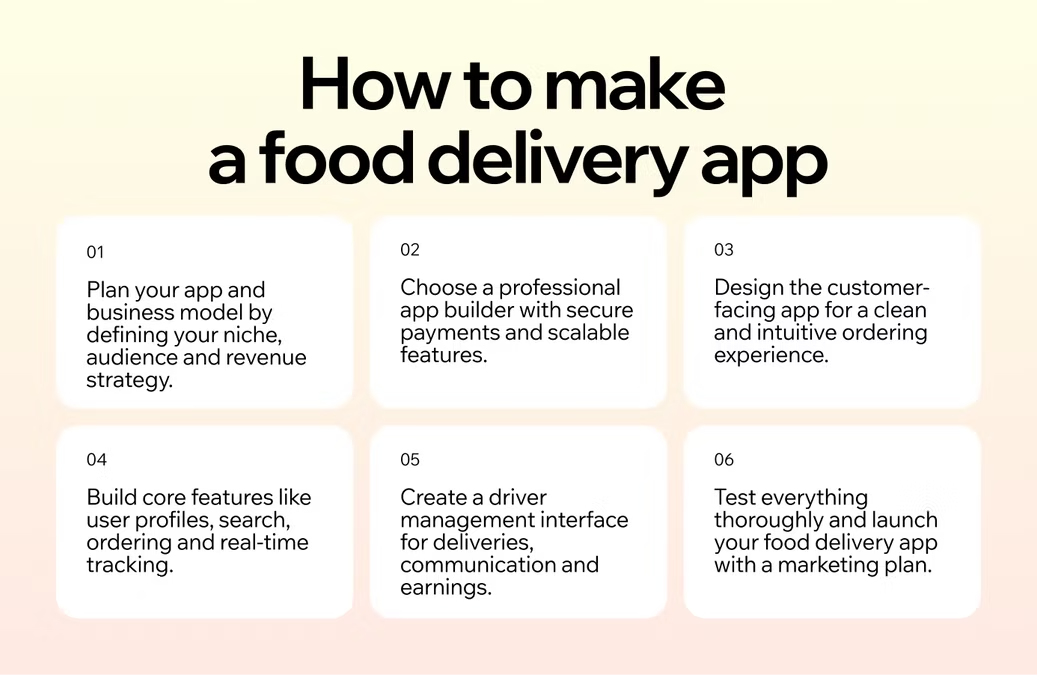
- Plan your app and business model
- Choose a professional app builder
- Design the customer-facing app
- Build your core features
- Create the driver management interface
- Test everything and launch
01. Plan your app and business model
Before anything else, decide what kind of platform you're actually building. A single-restaurant app is the fastest to launch, it's just your own menu and delivery flow. A multi-restaurant marketplace connects many restaurants to one pool of customers and drivers, which means far more moving parts: vendor onboarding, commission splits and order routing across multiple kitchens. Trying to build both at once is one of the most common reasons food delivery apps stall before launch, so pick one and expand later once you've validated demand.
Before you start building your app, you need a solid plan. Decide what kind of food delivery service you want to create.
- Will you focus on a specific niche, like vegan food or local farm-to-table restaurants?
- Who are your target customers and what do they value most?
Answering these questions will guide your feature development and marketing efforts.
Next, outline your business model. Common models include charging restaurants a commission on each order, adding a delivery fee for customers or offering a subscription service for free deliveries.
Your financial plan should also account for any planned marketing expenses, driver payments and platform maintenance.
You can explore these app ideas before getting started.
02. Choose a professional app builder
The right AI app builder is the foundation of your app. You need a tool that is powerful enough to handle complex logistics but simple enough for you to manage without a team of developers.
An app creator like Base44 is designed for this exact purpose, offering restaurant app templates and robust data management features perfect for a food delivery service.
Base44's Templates Marketplace gives you a production-ready head start on whatever you're building. Every template is built on best-practice app structures and plugs directly into Base44's AI tools so you can extend, personalize and adapt it to your exact needs in minutes.
When choosing your app builder, to build your mobile app, look for features like secure payment integrations, real-time data syncing for order tracking and the ability to create separate interfaces for customers, restaurants and drivers. The builder should be scalable, allowing your app to grow as your business expands.
03. Design the customer-facing app
The customer's experience with a food delivery app is paramount. Your app's design should be clean, intuitive and make ordering food as easy as possible.
Start with a simple and clear homepage that features a prominent search bar and categories for different types of cuisine. Restaurant profiles should include high-quality photos, menus, review and estimated delivery times.
Focus on a smooth user journey from browsing to checkout. The ordering process should be seamless, allowing users to customize their meals, add items to their cart and pay in just a few taps. A visually appealing and easy-to-navigate app will encourage customers to order again and again.
04. Build your core features
Your app needs a set of essential features to be functional. This includes user profiles where customers can save their addresses and payment information for faster checkouts. The search and filter functionality is also critical, allowing users to find restaurants by name, cuisine, location or rating.
The ordering system is the heart of your app. It must be able to handle customizations, process payments securely through integrated gateways and send order confirmations.
Finally, implement a real-time tracking feature so customers can see the status of their order from the moment it’s placed until it arrives at their door.
05. Create the driver management interface
An efficient delivery system relies on your drivers. They need their own simple interface within the app to manage their workload effectively. This driver-side portal should allow them to view and accept incoming delivery requests, see pickup and drop-off locations on a map and communicate with customers if needed.
The interface should also provide drivers with their earnings history and performance metrics. Building an app with AI that helps drivers work efficiently not only means faster deliveries for your customers but also helps you retain a reliable delivery fleet.
06. Test everything and launch
Before you introduce your app to the world, thorough testing is crucial. Go through every possible user flow for customers, restaurants and drivers. Place test orders, process payments, track deliveries and try to find any bugs or points of friction. Ask a small group of friends or family to test the app and provide feedback. Learn more about how to test an app before launch.
Once you’re confident that everything works as it should, it’s time to launch. Submit your app to the app stores and begin your marketing efforts to attract your first users and partner restaurants. The launch isn't the end, it's just the beginning. Continuously gather user feedback to make ongoing improvements.
Food delivery app examples you could build
The Neighborhood Spoon
The Neighborhood Spoon connects users with local, home-based chefs. What makes it unique is its focus on authentic, homemade meals that you can't find in commercial restaurants. This app help fosters a sense of community by allowing users to follow their favorite chefs and get notified about their latest menus.
Fresh Fare
Fresh Fare is a delivery service specializing in organic and farm-to-table meals. Its standout feature is its detailed sourcing information, letting customers know exactly where their ingredients come from. The app partners with local farms to provide meal kits and fresh produce in addition to prepared meals.
QuickBytes
QuickBytes targets busy professionals with a curated menu of healthy and fast lunch options. The app's unique selling point is its pre-order for the week feature, allowing users to plan and schedule their lunches in advance. This means they get a nutritious meal without interrupting their workday.
Benefits of creating a food delivery app
Building your own food delivery app gives you complete control over your business and brand. You can create a tailored experience for your customers without being limited by the rules and high fees of third-party aggregators.
This direct-to-consumer model allows you to keep more of your revenue, which can be reinvested into improving the service or offering better deals to customers.
Common mistakes when creating a food delivery app and how to avoid them
One of the biggest pitfalls is a complicated user interface. If customers can't easily find what they want and place an order, they'll abandon the app. Avoid this by prioritizing simplicity and testing your design with real users.
Another common issue is unreliable delivery tracking. Customers expect to know where their food is. Failing to provide accurate, real-time updates can lead to frustration and negative reviews. Invest in solid GPS integration and ensure your system for drivers and customers is perfectly synced.
Don't try to build every feature at once. Start with a solid, reliable core service—ordering and delivery. You can always add more complex features later based on what your customers actually want.
Market and grow your food delivery app
Once your app is live, growing your user base requires a targeted marketing strategy. Start by partnering with local restaurants and asking them to promote the app through their social media channels and in-store signage. Offer a launch incentive like discounted delivery fees or a free first order to drive early downloads and reviews. Use push notifications to re-engage customers with personalized deals and loyalty rewards. Paid social ads targeted to your delivery radius are one of the most cost-effective ways to reach new users in your area.
How to make a food delivery app FAQ
How much does it cost to build a food delivery app?
The cost can vary widely, from a few thousand dollars to hundreds of thousands. Using an app creator like Base44 significantly reduces costs compared to hiring a development agency, making it possible to launch with a much smaller initial investment. Your final cost will depend on the complexity of your features and design.
How do I make money with a food delivery app?
Most food delivery apps use a combination of revenue streams. This typically includes charging restaurants a commission fee on each order, adding a service or delivery fee for the customer, and offering premium placement for restaurants within the app. Some also offer subscription models where users pay a monthly fee for free deliveries.