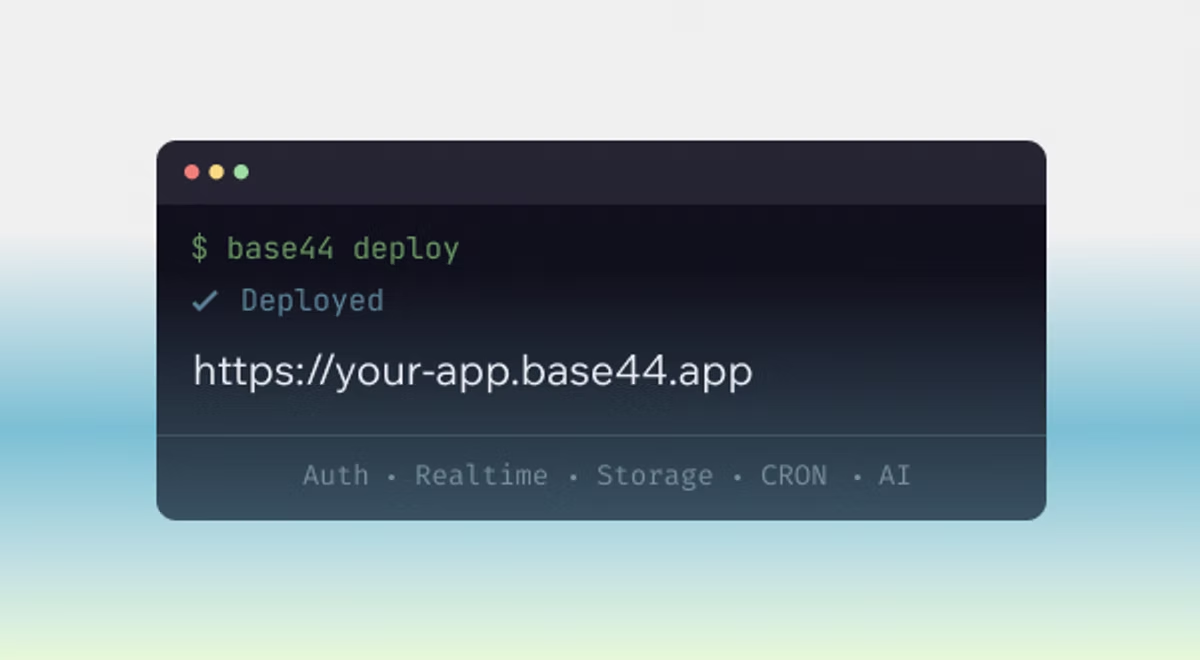
When Brik came to us with a need to scale their product as they went to market, we knew Base44 Backend was the solution.
Brik isn't your typical design tool. It doesn't just generate motion assets for you, it builds the platform that lets visual designers create and fully control their own custom motion design environments. The artists define the behavior, Brik just gives them total freedom to do it.
That kind of product demands a backend that can keep up. Here's how the Base44 CLI team made it happen, and what we learned along the way.
TL;DR: Brik and Base44 Backend

Brik needed a production-grade backend to power one of the most technically demanding frontends we'd seen. Using the Base44 Backend platform, the team scaffolded, connected and shipped it in two days instead of two weeks.
What it took:
- Secure secret management
- A complex, high-traffic database
- Custom backend functions handling core platform logic
- AI agent integration (because Brik's users are themselves building platforms)
- Multi-framework hosting, tested and deployed
The result: A live product, real users and a spontaneous happy hour.
Who is Brik and why does it matter?

Most AI-first design tools do the work for you. You describe what you want, and the tool spits out an asset.
Brik is different. Brik builds the platform, not the end product. It gives visual designers full, granular control over the motion behavior they want to implement. The designer isn't just a prompt writer. They're architects. Brik hands them the tools to build exactly what they have in mind, with zero compromise on creative control.
That distinction is what makes Brik genuinely exciting, and what made their backend challenge genuinely hard.
The challenge: scale fast without breaking things
Brik had a clear go-to-market goal and a tight timeline to hit it. They needed a backend robust enough to power an incredibly complex frontend, and they needed it quickly.
From the Base44 side, the technical picture was immediately clear. We'd need our developers working in parallel, moving quickly, without stepping on each other or affecting users in production. Before AI, that kind of coordination was a serious undertaking: setting up staging environments, establishing proper CI/CD pipelines, managing feedback loops without breaking production. Any developer who's been through it knows how many hours disappear into that process before a single line of real product code gets written.
That's exactly the kind of friction Base44 Backend is built to eliminate.
How we built it: piece by piece, fast
The backend for Brik took two days to build. Even knowing what Base44 is capable of, that number was impressive to see in practice.
Here's what that actually looked like, and why each piece moved so quickly:
- Secret management
- Complex, high-traffic database
- Backend functions
- AI agent integration
- Hosting and framework integration
01. Secret management
Secure environment variables and secret handling, done. No sprawling config files, no manual wiring. Handled cleanly from the start, directly in the Base44 Backend UI.
02. Complex, high-traffic database
Brik's data model isn't simple. Entities are constantly being created, queried, updated, deleted and pushed. We defined the schema, pushed it to the cloud and moved on. The database layer that would have taken days to spec and configure was operational in a fraction of that time.
03. Backend functions
There were a significant number of backend functions needed to handle the core platform logic. In Base44, those are serverless TypeScript functions with full database access, triggered by HTTP, events or scheduled jobs. Writing the logic you already understand is fast when the scaffolding is out of your way.
Learn more about Base44's backend:
04. AI agent integration
Here's where it gets interesting: Brik's whole product is about users building their own platforms. That means the platform logic isn't written by us, it's written by the user, dynamically, at runtime. That required solid AI agent integration baked into the backend.
With Base44's built-in AI integrations, wiring that up wasn't an obstacle.
05. Hosting and framework integration
We set up the framework integration, tested it and it was done. Base44 integrations supports the frameworks developers actually use: React, Vue, Next.js and more, so there was no friction there.
Each of these pieces, in a traditional setup, would have consumed significant time just in coordination and configuration. Here, they were checkboxes.
Learn more about Base44's integrations:
Lessons from the build: tips for working with AI and backend
Working on Brik was a great reminder of what actually makes AI-assisted development go well, and what can slow it down if you're not careful.
- Set up your MCPs and Skills before you start. Before scaffolding anything, make sure your agent knows what it's working with and what's off-limits. Getting this right at the start saves a lot of cleanup later.
- AI doesn't replace developers, it accelerates them. The best use of AI in a build like this is handling the tasks you already understand: scaffolding, writing logic you've already thought through, setting up the repetitive infrastructure. The coder still needs to own the codebase. Full stop.
- Build in small, verified chunks. This project, like every successful AI-first project, moved forward one confirmed step at a time. Get AI to build something, review it, then move to the next task. One-shot, end-to-end prompts don't work at this scale.
- Start with the client. Once you can see the full frontend, you know exactly what the backend needs to do and how everything should connect. It makes the technical picture clear before you commit to architecture decisions.
Why Base44 for your backend?
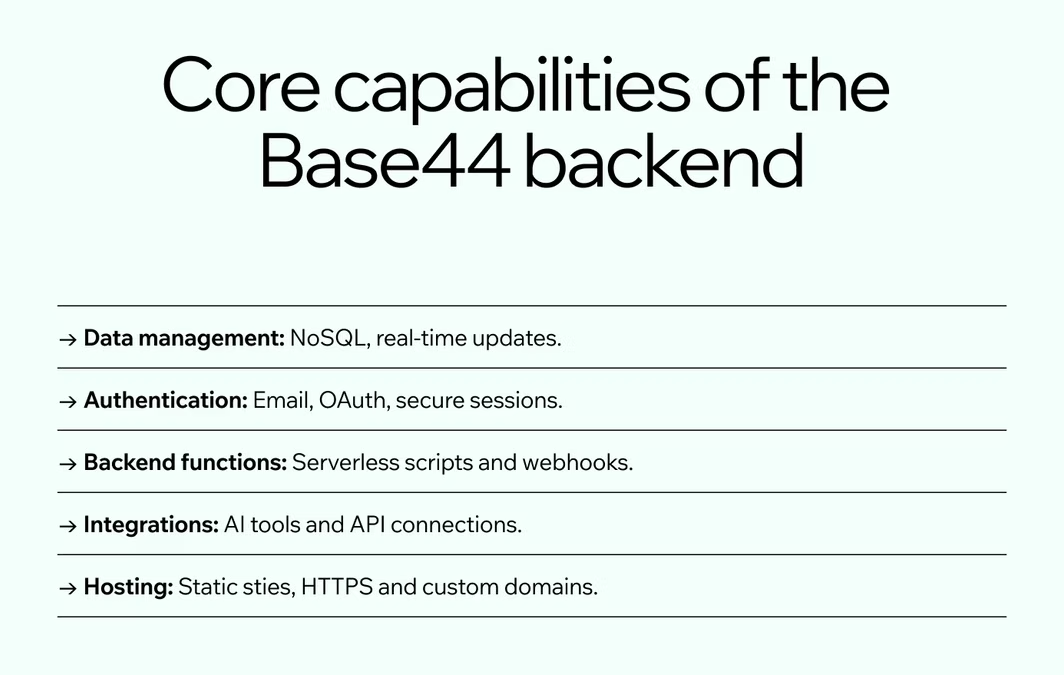
Everything is in one place. The SDK is clean and readable — by developers and AI agents alike. The MCP connects you to everything you need. And the CLI gets you from zero to a fully scaffolded backend in just a couple of minutes.
That last part isn't a figure of speech. It's a demo.
Brik is live. Their users are building. And the backend that's powering all of it came together in two days.
Ready to build? Get started with Base44 Backend →