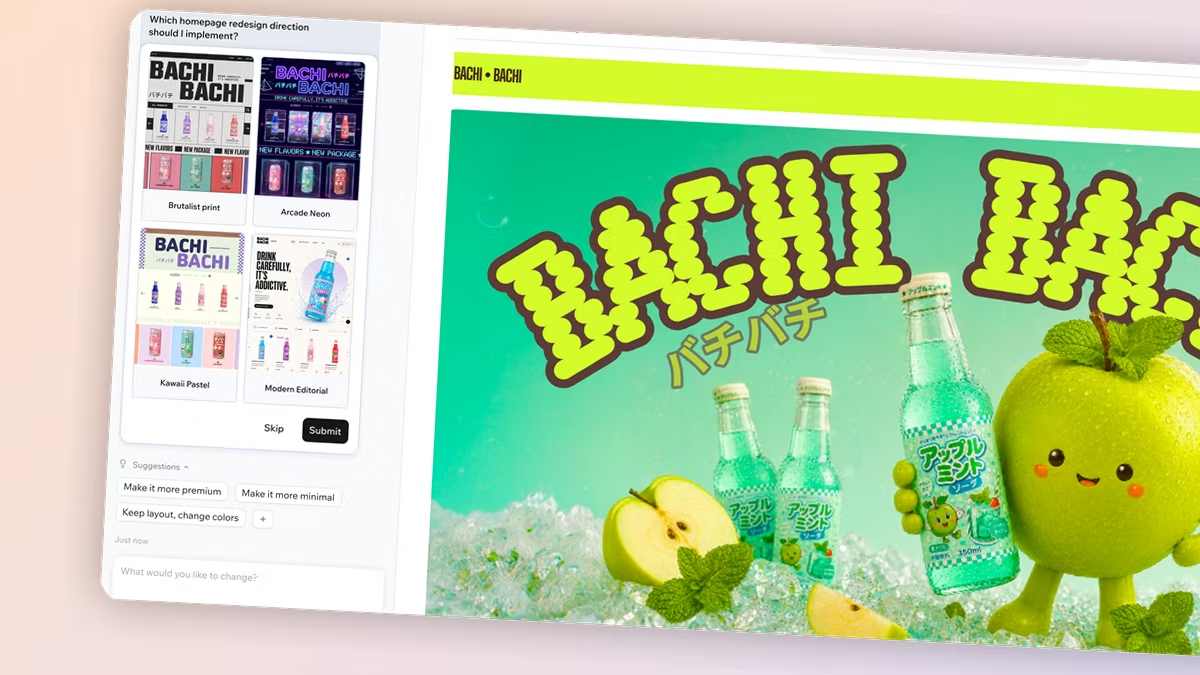
How to make a fashion website comes down to a handful of decisions: your brand story, your platform, your pages and your product setup. Base44's AI website builder turns most of that into one conversation: describe your brand and get back a live, ready site built around it.
The same conversational approach carries over from our guide on how to vibe code a website, worth a look if this is your first AI powered build. Base44's AI website builder generates a complete, production-ready website from a single text prompt, so you go from idea to live store without hiring a designer or developer.
Turn your idea into an app with Base44
TL;DR: How to make a fashion website
You can make a fashion website in seven steps: define your brand and audience, pick a domain and host, build the site itself, tailor the design, add key pages and product listings, connect eCommerce and payments and finish with SEO and promotion. Base44 handles steps two through five in one build, so if speed matters most, start with how to create a website with AI before you touch a single template.
How to make a fashion website in 7 steps
Each step below builds on the last, so work through them in order the first time you make a fashion website. Once you have done it once, revisiting any single step, like a new collection page or a design refresh, takes minutes instead of a full rebuild.
01. Define your fashion brand and target audience
Before you touch a builder, get specific about three things: what you sell, who buys it and why they would pick you over the next fashion website they find. Clothing, accessories, footwear or a mix each come with different photography, sizing and shipping needs, so settle this first.
Think about who you are building for: their age range, style preferences and shopping habits. A streetwear brand and a bridal designer need completely different homepages, even though both are, technically, fashion websites.
Also decide how you will stock the store. You might design and produce your own pieces, resell from other brands, work with a dropshipping partner or run a print-on-demand model where a third party handles printing and shipping. Each option changes what your product pages and backend need to do, so lock this in before you start building.
Pricing matters early too. Factor in sourcing or production costs, packaging, shipping and the time it takes to run your fashion website day to day, then set margins that still work once discounts and returns are factored in. Keep an eye on the trends and seasons in your category as well, since that affects what should be front and center on your homepage at any given time.
02. Pick a domain name and hosting
Your domain name is the address builders type to find your fashion website, so keep it short, easy to spell and closely tied to your brand name. Skip numbers or special characters that make it hard to say out loud or share verbally.
Hosting is what keeps your site live, fast and secure. If you build with Base44, this part is already handled. Base44 connects your custom domain as part of the build, so your site is live and branded without a separate setup process.
03. Build your site with an AI website builder
This is the step that used to take the longest: turning a blank page into an actual layout. Describe your brand, your products and the mood you are going for, and Base44 builds a full site around that description instead of handing you a template to fill in yourself.
If you want to compare your options first, our breakdown of the best AI website builders covers what to look for beyond raw speed: how much manual control you keep, how the output handles product pages and how easily you can adjust things later.
04. Design your fashion website to match your brand
Fashion is a visual category, so your design choices carry more weight here than on most other kinds of sites. A few elements matter most.
- Color palette: pick colors that match the mood you want, bold and bright for a playful brand, muted and neutral for something more minimal or upscale. Use the same palette consistently across buttons, headers and backgrounds.
- Typography: choose fonts that are easy to read and match your brand's personality, then stick to two or three pairings for headings and body text.
- Logo and imagery: your logo should be visible on every page, and your product photography should be high resolution and consistent in style, since that is what actually sells the clothes.
- Layout: keep navigation simple. Visitors should reach any product category in one or two clicks, and the whole layout needs to look right on a phone screen, since most fashion shopping happens on mobile.
If you are not sure where to start, look at a handful of fashion websites you personally like and note what they have in common: is it the photography, the color palette, the way categories are organized. That gives you a clearer brief to describe when you build your own site, whether you are working with a designer or an AI website builder.
Learn more about how to build a real estate website.
05. Add key pages and product listings
A handful of pages cover most of what a fashion website needs: a homepage that shows your latest collection, individual product pages, an about page that tells your brand's story, a contact page and a shipping and returns page that sets clear expectations.
On product pages specifically, pair high quality images from multiple angles with a clear, honest description: materials, fit and sizing information first, since sizing questions are the biggest driver of returns in fashion eCommerce. Add a size chart if you sell clothing, and leave room for customer reviews once you have them, since they do a lot of the trust building for you.
Product photography is worth a dedicated focus. For fashion, shoppers can't touch the fabric, so your images have to do that work. Use consistent backgrounds across all product shots so the catalog feels cohesive. Show each piece on a model and as a flat lay if you can: the model shot tells people how it fits and moves, the flat lay makes it easy to see the details. Even lighting matters more than equipment , a ring light or a bright window beats a dark shot from an expensive camera. Compress your images before uploading so they load quickly (slow pages lose sales), and use descriptive file names and alt text for each image, which also helps with SEO.
A few more pages round things out depending on what you sell. If your products are also available in physical stores, a location or stockists page with a simple list or map helps shoppers find you offline too. A frequently asked questions page saves you repetitive customer service messages by answering shipping, sizing and return questions up front, and a wishlist or save-for-later option gives shoppers who are not ready to buy yet a reason to come back.
06. Set up eCommerce and payments
If you are selling directly from your fashion website, you will need a shopping cart, a secure payment processor and clear shipping rules. Most builders support Stripe or PayPal out of the box, and both handle the PCI compliance work of protecting customer card details for you.
Base44's approach to eCommerce app development carries over here too: cart, checkout, inventory and order tracking get set up as part of the same build instead of bolted on after launch. Decide early how you will handle shipping, whether that is free shipping built into your prices, a flat rate per order or rates calculated by weight or carrier, since this affects your margins from day one.
Order tracking is worth adding too. Letting customers follow their package from checkout to delivery cuts down on where-is-my-order messages and builds confidence in brands that are still building a track record. If you plan to sell on social platforms directly, check that your eCommerce setup supports those integrations before you commit to a platform.
Size and fit information cuts returns and increases conversions. Add a size guide to your site, even a simple one that maps your sizing labels to centimeter or inch measurements, and link it prominently from every product page. For items where fit varies (knitwear, structured jackets, footwear), a short fit note on the product page such as 'runs small, size up' or 'true to size, relaxed fit' helps buyers commit. A clear returns policy on the same page removes the last hesitation. The fewer questions a shopper has to email you before buying, the more likely they are to just buy.
07. Optimize and promote your fashion website
Once your fashion website is live, two things drive traffic: search visibility and promotion. For SEO, use the terms your buyers actually search for in your page titles, product descriptions and blog posts if you start one, and keep page load times fast, since slow sites lose visitors before they even see your products.
For promotion, fashion leans heavily on visual platforms. Instagram, TikTok and Pinterest all reward strong product photography and short video, and a lot of brands see real traction from partnering with a few relevant creators rather than running broad ads. Email marketing rounds this out: collect addresses at checkout and during signup, then use that list to announce new collections and offer early access to returning customers.
Starting a blog tied to your fashion website is optional but effective. Posts about styling, new collections or industry trends give you more pages to rank for relevant search terms, and they give returning customers a reason to check back between purchases.
What you can build with Base44 for a fashion brand
A fashion website covers more ground than a single template usually allows for, and Base44 is built to handle that range within one conversation instead of a different tool for each piece.
A boutique storefront selling your own designs needs strong product photography, size charts and a smooth checkout, and describing that setup gets you a site built around showing off a small, curated collection.
A multi-brand or dropshipping store needs to handle a bigger catalog: filtering by category, size and price, plus clear per-brand or per-supplier organization, since customers are comparing more options at once. Base44's guide on how to make an ecommerce website with AI walks through that catalog and checkout setup in more depth.
A print-on-demand or made-to-order brand has different needs again: fewer live product photos, more emphasis on customization options and clear expectations around production time before an item ships.
Once your site is generated, you keep real-time control over the details: adjusting colors, fonts and spacing by clicking directly on any element and seeing the change instantly, rather than waiting on a developer for small tweaks. That matters most in fashion, where a seasonal refresh or a new collection often means updating the whole homepage at once.
Whichever setup fits your fashion website, the underlying build works the same way. You describe what you are selling and who you are selling to, and Base44 does not hand you a starting point to finish yourself, it delivers a complete site ready to share with the world. If you would rather avoid a builder entirely and want full control from the first page, our guide on how to build a no-code website covers that route too.
Frequently asked questions about creating a fashion website
How much does it cost to build a fashion website?
Costs vary widely based on the platform and features you choose. Budget-friendly AI website builders, like Base44 or Wix, can run $0 to $50 a month, while hiring a designer or developer can cost several hundred to several thousand dollars upfront. Factor in ongoing costs too: domain registration, hosting if it is not bundled in, and any payment processing fees on top of your monthly plan. If you are just testing an idea, starting with a free or low-cost plan and upgrading once real sales come in keeps early costs down.
Can I turn my fashion website into an online store?
Yes, adding eCommerce to an existing fashion website usually means turning on a shopping cart, connecting a payment processor and setting up shipping rules. If you built with an AI website builder, this is often a matter of describing what you want to add rather than rebuilding the site from scratch.
How long does it take to build a fashion website?
A basic fashion website can go live in a few hours with an AI website builder like Base44, especially if you already have your product photos and brand details ready. A fully custom build with a designer or developer typically takes several weeks, depending on how many pages and product listings you need. Adding more product listings or custom pages afterward does not require starting over either way.
Do I need coding skills to build a fashion website?
Most modern website builders, including AI website builders like Base44, are built for people with no coding background, so coding skills are not a requirement here. You describe or select what you want and the platform handles the technical work. It is worth reading up on mistakes to avoid when using an AI website builder before you start, so you know what to double check once your site is live.
How do I promote a new fashion website?
Start with the platforms your audience already uses. Instagram, TikTok and Pinterest tend to work well for fashion specifically. Pair consistent posting with email marketing, and consider partnering with a few relevant creators instead of spreading a small budget across broad paid ads.