
If you want to know how to make a roofing website, the fastest path today skips hiring a designer and skips the plugin setup entirely. Base44's website builder turns a description of your roofing business into a working site with service pages, a project gallery and lead forms built in.
Before you start building, it helps to know what a website builder does under the hood, since that shapes how much control you'll have over your site's layout and features. Base44's AI website builder eliminates the back-and-forth of manual web design, making layout and styling decisions automatically based on what you describe.
Turn your idea into an app with Base44
TL;DR: how to make a roofing website
Building a roofing website comes down to five steps: define your services and area, pick a platform, add the pages homeowners look for, build trust with photos and reviews, then launch and track leads. Reviewing the best AI website builders for a service business helps you compare options before you commit to one, but most roofing contractors can go from idea to a live site in a single session. Most contractors can go from a blank page to a working site once they know which pages and features actually matter to homeowners.
| Step | What to do |
|---|---|
| 1. Define services and area | Decide which services and locations the site should target. |
| 2. Pick your AI website builder | Pick a website builder that supports service pages, forms and a gallery. |
| 3. Add key pages | Include services, contact, testimonials, and a project gallery. |
| 4. Build trust | Add photos, reviews, and local SEO details. |
| 5. Launch and track | Go live, connect analytics, and monitor leads. |
How to make a roofing website in 5 steps
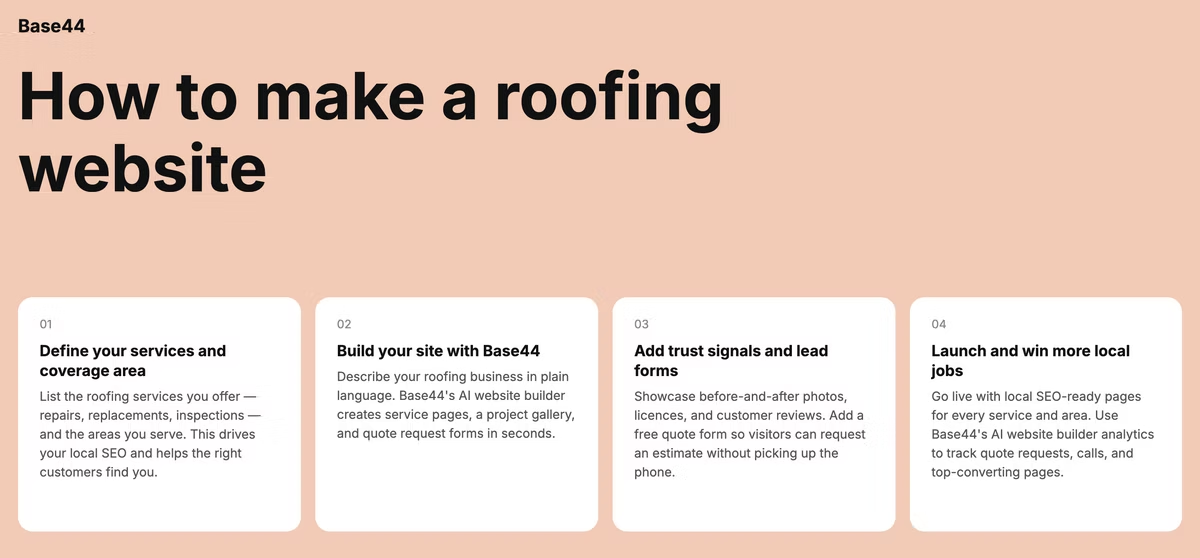
Each step below builds on the last, from defining what your roofing business offers to getting the finished site in front of homeowners.
Base44 is an AI website builder that generates complete, production-ready websites from a single text prompt, so a service business like a roofing company can move from a rough idea to a working site without hiring a developer. None of the steps require design or coding experience, since describing the business and its services is the only input the builder needs.
01. Define your services and service area
Start by listing every service you offer, such as roof replacement, repairs, inspections, storm damage and gutter work, since each one can become its own page later. Note the cities or neighborhoods you actually serve, because homeowners searching for a roofer almost always include a location in their search.
Write down what makes your business different, whether that's licensing, years in business or a specialty like metal roofing, so the site has a clear angle instead of reading like every other roofing page online.
This groundwork also makes the next step faster, since a website builder can only build the right pages if it knows what the business actually does. Talking to a few recent customers about why they chose your business can also surface language worth reusing directly on the site.
02. Choose the right website builder to build on
The AI website builder you pick determines how easily you can add service pages, a project gallery and lead capture forms without extra plugins. Traditional builders often require picking a template built for a different industry, then manually swapping in roofing-specific sections, which adds setup time before the site is ready to show a single customer.
Comparing options for a restaurant website or any other local service business shows the same pattern: the right platform matches your business type from the start instead of forcing you to work around a generic template. Look for a platform built around describing the business in plain language rather than picking through dozens of generic templates one at a time.
03. Add the pages homeowners look for
Homeowners comparing roofers look for the same handful of pages every time: services, about, contact and a gallery of completed jobs. Describe the pages you need, such as a services page with each offering listed separately, a contact page with a quote form and a gallery organized by project type and your AI website builder generates the structure for each one.
Keep the first version focused on these core pages, then add extras like a blog or a financing page once the site is live and you know which pages actually bring in calls. A dedicated page for financing options can also help, since roof replacement is a significant expense many homeowners want to plan around. An FAQ section addressing common questions like warranty terms or how long a typical job takes can cut down on repetitive phone calls too.
04. Build trust with photos, reviews and local SEO
Roofing is a high-trust purchase, since homeowners are inviting a crew onto their roof for a job that costs thousands of dollars. Before-and-after photos of completed projects do more to prove quality than any description of your work, so prioritize real photos over stock images wherever possible.
Embed customer reviews directly on the site and connect your Google Business Profile so the same reviews and service area show up in local search results. Local details like your city name in page titles and a clear service area map help the site show up when someone nearby searches for a roofer.
A short video walkthrough of a recent job, even filmed on a phone, often builds more trust than a polished photo alone. Consistency matters as much as quality here: the same business name, phone number and address should appear identically across the website and every directory listing.
05. Launch and track your leads
Test every contact form, phone number link and quote request button before the site goes live, since a broken lead form quietly costs jobs without any obvious warning sign.
Connecting a custom domain name to your finished site takes one click, which matters for a roofing business since a branded domain looks more established than a generic subdomain to a homeowner comparing contractors.
Once the site is live, set up basic analytics so you can see which pages bring in calls and form submissions, then adjust the site based on what homeowners actually respond to rather than guessing. Reviewing which pages get the most visits after the first month helps decide where to add more detail or a stronger call to action.
Base44 roofing website examples
Base44's AI website builder is built for contractors who need a real, working site shipped fast, without the overhead of a traditional web design project. A roofing site shares a lot of structure with other local service businesses, so it's worth looking at how a law firm website or a real estate website handles the same trust-building basics before adapting the approach for roofing. The same building approach works whether the business handles ten jobs a month or runs crews across an entire region.
Residential roof replacement specialist
A contractor focused on full roof replacements can build a site around a before-and-after gallery, a materials comparison page and a quote request form, giving homeowners everything they need to start a conversation. Adding a simple cost range for common roof types can also cut down on unqualified inquiries before they reach the phone.
Storm damage and emergency repair crew
A crew that handles emergency calls can put a phone number and a same-day availability message at the top of every page, since homeowners dealing with storm damage need to reach someone immediately, not browse a portfolio first. A short section explaining how insurance claims typically work can also ease a homeowner's stress during an already difficult week.
Commercial roofing contractor
A commercial roofer can describe a site with a case studies section for completed office and warehouse projects, plus a dedicated page for maintenance contracts aimed at property managers rather than individual homeowners. Listing certifications and safety records prominently matters more here, since property managers often compare several bids before choosing a contractor.
Family-owned local roofing company
A family business can lean into an about page that tells its story, paired with a review section pulled from Google, giving the site a personal feel that larger competitors often skip. Featuring the names and photos of the actual crew members, rather than stock imagery, reinforces the personal angle even further.
Roof inspection and maintenance service
A contractor focused on inspections and maintenance plans can build a site around a simple booking form and a clear explanation of what an inspection covers, turning a lower-cost service into a steady stream of repeat customers. Offering a seasonal reminder signup can also turn a single inspection into an ongoing relationship with the homeowner.
Frequently asked questions about creating a roofing website
Can I build a roofing website myself without coding skills?
Yes, AI website builder, like Base44, generates the full site, including service pages and contact forms, from a written description, so no coding knowledge is required. Describing your business and the pages you want is the only input the builder needs to produce a working site. This removes the biggest barrier that has historically kept smaller roofing businesses off the first page of search results.
How long does it take to build a roofing website?
A site built by describing your business to an AI website builder can be ready in a single session, compared to weeks for a custom-built site or a template-based build that still needs manual setup. The main time cost after that is gathering real project photos and reviews, since those matter more to homeowners than how quickly the site itself came together. Businesses that already have a folder of project photos and a list of reviews ready to go tend to move through this fastest.
What makes a roofing website rank well on Google?
Local relevance matters most: your city and service area mentioned naturally on the site, a connected Google Business Profile and consistent business information across the web. Fast loading speed and mobile-friendly design also affect rankings directly, since most homeowners search for a roofer from a phone. Reviews and consistent contact information across directories also reinforce the trust signals search engines look for in local results.
Should my roofing website include an online quote tool?
A simple quote request form works well for most roofing businesses, since accurate pricing usually requires an in-person inspection anyway. A basic form that collects the homeowner's contact details and a description of the job gives you enough to follow up quickly, which matters more for closing the lead than an instant price estimate. If your pricing is fairly standardized, like a flat inspection fee, a simple online booking option can work well alongside the contact form.