
Ready to see what Base44 can do for you? Get started →
Vibe coding is revolutionizing software development by letting you describe your app ideas in plain language while AI handles the technical work. Thanks to AI-powered development, vibe coding is transforming how we create software and making app builder tools more accessible to everyone, regardless of technical background.
First introduced by renowned AI researcher Andrej Karpathy in February 2025, vibe coding represents a fundamental shift in software development. Instead of wrestling with syntax and debugging mysterious error messages, you simply describe what you want your app to do in plain English and AI handles the technical heavy lifting. He described the idea as letting yourself “forget that the code even exists”.
This isn't just another tech buzzword; it's already reshaping the app creation landscape. According to recent reports, 25% of startups in Y Combinator's 2025 cohort have codebases that are almost entirely AI-generated. Major tech companies like IBM, Google, Wix and Microsoft are investing heavily in vibe coding platforms, recognizing its potential to democratize app creation.
Base44 exists to make building software feel as natural as explaining what you need.
— Maor Shlomo, Founder & CEO of Base44
At the same time, more than 80% of businesses report a shortage of developer talent, making vibe coding an increasingly critical tool for teams that need to ship products fast.
Platforms like Base44 make it easy to bring your vision to life, enabling fast prototyping, iteration and deployment without deep programming knowledge. Use a quick start guide for vibe coding, explore a prompt guide or browse a prompt library to get started efficiently and maximize results. Base44 is a vibe coding platform that turns natural language conversations into fully functional production-ready application code.
Try vibe coding out for yourself. Learn how to build an app with AI and explore the best vibe coding tools to bring your ideas to life without deep technical knowledge.
TL;DR: what is vibe coding?
Base44's vibe coding turns natural language conversations into fully functional production-ready application code.
Base44 gives you built-in tools to verify and secure your app, including an automated security scanner you can run before you publish, so you're not starting from zero on security.
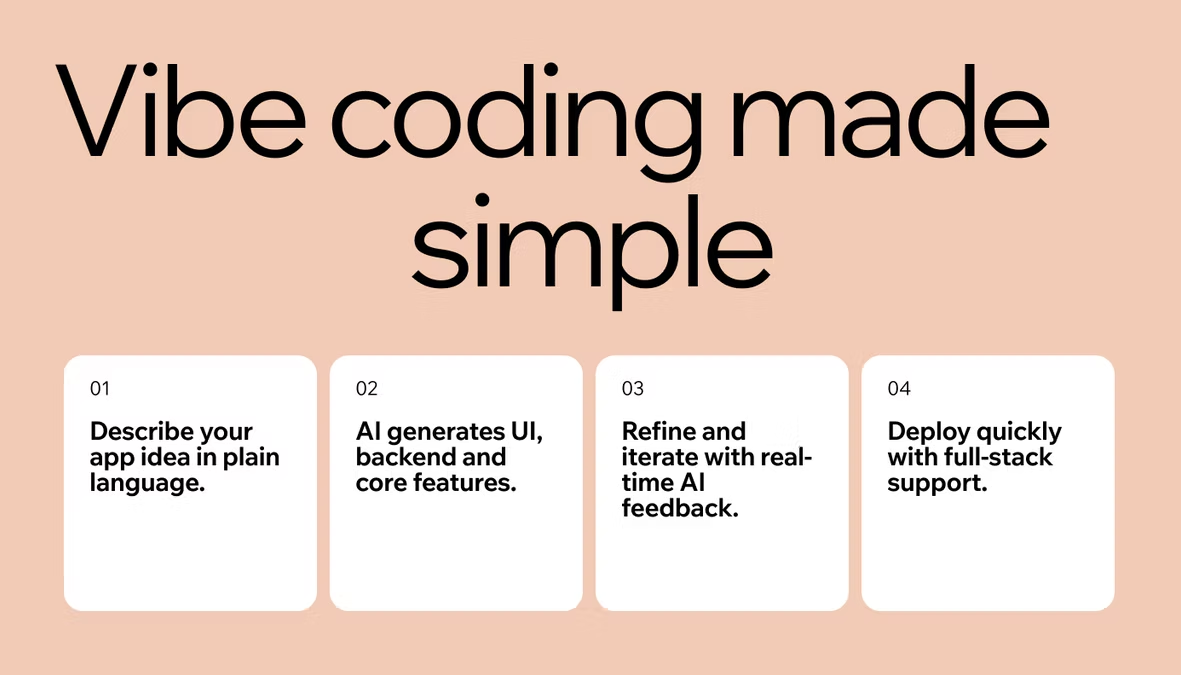
You describe your app in plain language. The AI builds it. You review, refine and deploy. No syntax, no development environment, no debugging line by line.
Key highlights
- Vibe coding is AI-assisted software development
- Vibe coding converts natural language instructions into functional code via a chatbot
- Removes traditional coding barriers, opening app development to non-technical creators
- Iterative process allows for rapid prototyping and refinement with AI collaboration
- Base44 provides full-stack app generation, integrated testing and deployment
- Ideal for entrepreneurs, educators, designers and small businesses facing developer shortages
| How does vibe coding work | What happens |
|---|---|
| Describe your idea | Explain your app in plain language to the AI |
| AI generates foundation | Core functionality, UI, backend logic and integrations created automatically |
| Review & refine | Test and provide feedback to improve features and design |
| Iterate & deploy | AI updates the app based on feedback; Base44 handles deployment |
| Tools & features | Full-stack generation, security checks, real-time preview, professional-grade hosting |
Discover more:
What is vibe coding?
Vibe coding is an AI-powered approach to building software that turns your natural language descriptions into working code. Imagine having a conversation with a highly skilled programmer who instantly transforms your ideas into functional apps.
The term captures the essence of this new paradigm. As Andrej Karpathy explained, vibe coding is about “fully giving in to the vibes, embracing exponentials and forgetting that the code even exists.” In short, it’s about focusing on what you want to achieve, not how to do it technically.
Learn more about how to get started with vibe coding.
How vibe coding differs from traditional programming
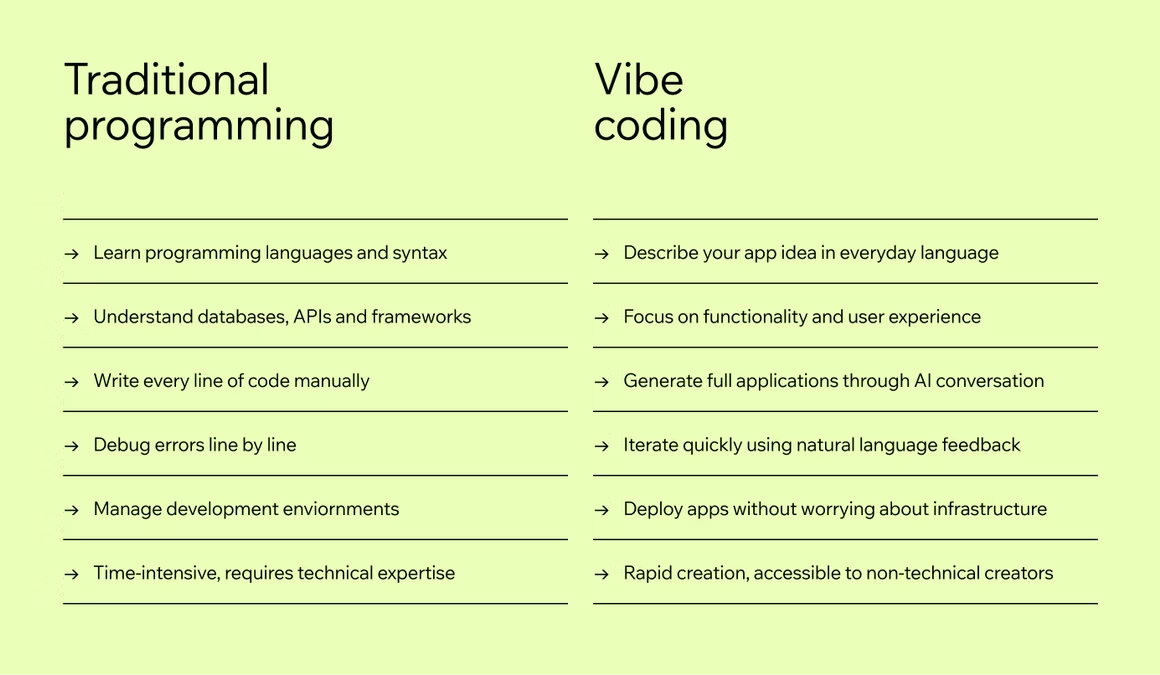
Traditional coding requires you to:
- Learn programming languages and syntax
- Understand complex concepts like databases, APIs and frameworks
- Write every line of code manually
- Debug errors line by line
- Manage development environments and deployments
Vibe coding lets you:
- Describe your app idea in everyday language
- Focus on functionality and user experience
- Generate full applications through AI conversation
- Iterate quickly using natural language feedback
- Deploy apps without worrying about infrastructure
Neither approach is universally better. Traditional development gives you precise control over every detail; vibe coding gives you speed and accessibility. Many teams now combine both: vibe coding for rapid prototyping and traditional development for scaling what works.
Learn more:
The benefits of vibe coding are significant. Vibe coding removes barriers that once trapped great ideas in the minds of non-technical creators. Entrepreneurs, designers, educators and innovators can now build sophisticated apps without months or years of coding.
Learn more about prompt engineering.
Full vibe coding vs. human-led vibe coding
Not everyone uses vibe coding the same way. Some builders go fully hands-off: describe what they want and let the AI handle everything, only stepping in if something breaks. Others take a human-led approach, treating the AI as a powerful collaborator; they review each output, guide key decisions, and stay closely involved throughout. Neither is wrong. If you're non-technical or just getting started, full vibe coding is often the fastest path to a working app. If you're more experienced or working on something complex, human-led vibe coding gives you tighter control. With Base44, you can start fully hands-off and increase your involvement as your build gets more sophisticated.
What is vibe coding vs low code development?
- Low-code: You use drag-and-drop buttons and pre-built templates (like Wix's website builder. It's much more structured than with a vibe coding tool.
- Vibe Coding: You use natural language and then the vibe coding tool's AI generates real, custom code in the background. It's much more flexible thank low code because the AI vibe coding tool, like Base44, can build almost anything you can describe.
How vibe coding works

Vibe coding operates via a conversation between you and an AI assistant, similar to working with an extremely capable development partner. The process unfolds in a simple cycle that feels more like creative collaboration than technical programming.
- Describe your vision
- AI generates the foundation
- Review and refine
- Iterate and improve
01. Describe your vision
It all starts with your idea and your vibe coding prompts. Just tell your AI assistant what you want in plain English. For example:
"I want to create a meal planning app that suggests recipes based on ingredients I have at home and dietary restrictions."
The more details you give, like target users, style preferences or must-have features, the smarter your AI can get. Think of it as chatting with a co-developer who really “gets” your vision.
02. AI generates the foundation
Once your idea is clear, the AI gets to work. It builds the app’s skeleton: user interface, backend logic, integrations, you name it. Within minutes, you have a working foundation that’s ready for your input. On Base44 this runs on Base 1, a model it trained for this kind of build, and Superagents can stand up the database, interface, authentication and integrations together from a single conversation.
03. Review and refine
Now the fun part: playing around with what the AI created. Test features, explore the interface and spot areas that need tweaking. Give feedback like:
"The recipe suggestions are great, but I need a shopping list feature that tracks missing ingredients."
The AI learns and adapts from each instruction, so your app evolves with every interaction.
Base44 gives you several ways to steer this stage. Discuss mode lets you talk a change through before anything gets built. Visual Edits let you click an element in the preview and describe the change directly. AI Controls keep changes inside the areas you name, and Revert history restores any earlier version when a change goes the wrong way.
04. Iterate and improve
Keep refining, adding features, adjusting layouts or tweaking workflows. Every tweak is instantly implemented, letting you shape your app exactly how you imagined it.
The beauty of vibe coding lies in its accessibility. You don't need to understand databases to request data storage or know about APIs to integrate third-party services. The AI handles these technical complexities while you focus on the creative and strategic aspects of your application.
How to get started with vibe coding

Kick off your vibe coding journey with practical steps and see how Base44 can support you every step of the way.
- Decide what you want to build
- Choose a vibe coding tool
- Build your app with vibe coding
01. Decide on what you want to build
Success starts with clarity. The more specific you are about your app’s purpose, target users and must-have features, the smarter your AI assistant can be.
Ask yourself:
- What problem does my app solve?
- Who will use it and in what scenarios?
- Which features are essential vs. optional?
- How will users navigate and interact with the app?
Instead of a vague prompt like “I want a fitness app,” go for: "I want to create a workout tracking app for busy professionals who exercise at home. Users can log workouts, track progress and receive motivational reminders."
Base44 features make this easy. Its guided Prompt Library and prompt guides help clarify your vision so your concept is rock-solid before development begins.
Learn more about some of the best AI prompts to build a website.
02. Choose a vibe coding tool
Picking the right tool can make or break your experience. Look for platforms that offer everything from AI code generation to deployment, all wrapped in an intuitive interface.
Key features to look for:
- Natural language processing that understands your instructions
- Full-stack app generation (not just front-end snippets)
- Integrated development environment for seamless workflow
- Built-in deployment options
- Active community and support resources
Why Base44 stands out: Unlike platforms that leave you stranded after code generation, Base44 provides end-to-end support. Its combination of powerful AI and a user-friendly interface make it accessible for beginners while delivering professional-grade results.
03. Build your app with vibe coding
Now it’s showtime. Collaborate with your AI assistant to bring your vision to life. Clear communication, testing and iteration are your superpowers.
Best practices for vibe coding:
- Start with core functionality before adding extras
- Be specific with instructions and feedback
- Test frequently and give detailed insights on what works
- Ask questions if something isn’t clear
- Save stable versions as checkpoints to experiment fearlessly
Example workflow:
"Create a budget tracking app with income and expense categories" → Review →"Add a monthly spending report with visual charts" → Test →"Make the charts interactive so users can click for detailed breakdowns" → Final refinements
Base44’s intelligent AI learns from your feedback, getting smarter with each interaction. Checkpoints automatically save stable versions and real-time previews show your changes instantly, making iteration fast, fun and stress-free.
What are some of the best vibe coding tools?
The vibe coding landscape includes several platforms, each with unique strengths and target audiences. Understanding what makes an effective vibe coding tool helps you choose the right platform for your needs.
Essential features to look for:
-
Comprehensive AI capabilities: The best platforms go beyond simple code generation to understand context, maintain conversation history and learn from your preferences. Look for tools that can handle complex, multi-step requests and provide intelligent suggestions.
-
Integrated development environment: Effective vibe coding requires seamless transition from conversation to testing to refinement. Platforms should provide built-in preview capabilities, debugging tools and version control without requiring external setup.
-
Full-stack generation: Complete applications need more than frontend code. Top platforms generate databases, user authentication, API integrations and backend logic as part of the conversation process.
-
Deployment simplicity: The promise of vibe coding breaks down if you can't easily share your creations. Look for platforms offering one-click deployment, automatic scaling and domain management.
-
Security and reliability: Professional applications require robust security measures, data protection and reliable hosting infrastructure built into the platform.
How Base44 delivers on every criterion:
-
Advanced AI conversation system: Base44's AI understands nuanced requests and maintains context across extended development sessions. The platform learns from your patterns, making suggestions increasingly relevant and accurate over time.
-
Seamless integrated experience: From initial idea to live application, Base44 provides everything in one environment. The platform's real-time preview system shows changes instantly, while built-in debugging tools help identify and resolve issues through simple conversation.
-
Complete application generation: Base44 creates full-stack applications including sophisticated backend systems, database management and third-party integrations. You don't need to understand these technical components, just describe what you want your app to accomplish.
-
Professional deployment capabilities: With Base44's one-click deployment system, your applications go live on professional hosting infrastructure with automatic scaling, security protocols and performance optimization built in.
-
Professional-grade security: Base44 implements industry-standard security measures, data encryption and privacy controls, ensuring your applications meet professional requirements without additional configuration.
| Essential feature | How Base44 delivers |
|---|---|
| Comprehensive AI capabilities | Understands nuanced requests, maintains context and learns from your patterns for smarter suggestions |
| Integrated development environment | Offers real-time preview, built-in debugging and version control in a single seamless interface |
| Full-stack generation | Generates complete applications including backend logic, databases, user authentication and third-party integrations |
| Deployment simplicity | One-click deployment with automatic scaling, domain management and optimized hosting |
| Security & reliability | Implements industry-standard security, data encryption, privacy controls and professional-grade reliability |
Get started today and learn how to secure an app while building with confidence.
Tips for better vibe coding
- Be specific with your instructions. For example avoid general statements like, ' improve the design,' and instead use, 'change the color of the button to a darker shade.'
- Use concise prompts. You need to give specific instructions but they don't need to be long and detailed, they can be short and to the point but specific too.
- Provide context for what you need. Acknowledge expected constraints or issues.
- Use vibe coding examples to guide. This helps you to avoid incorrect assumptions from your vibe coding tool.
- Give feedback as you go. Test the output you're given, figure out how it works or doesn't, then decide how to clearly explain the fix or fixes.
- Use version control where possible. Base44 syncs two ways with GitHub, so you can export your code and roll back to any earlier version. Then you can track changes and revert when something goes wrong.
- Start a new chat when faced with loops. Don't get stuck in a chat loop, start a new chat with a fresh instruction.
- Debug if you can. Check logs. Let your tool know.
Base44's own prompt guide sets out a simple shape worth following: say what the app does, who it is for and why it is useful. Getting those three right in your opening prompt usually beats a long list of details.
What are the limitations of vibe coding?
Like any new technology, vibe coding has real limitations worth understanding. Security is the most critical: AI-generated code is sometimes excluded from normal code reviews, which can introduce vulnerabilities that go unnoticed. A December 2025 analysis by CodeRabbit of open-source pull requests found that AI co-authored code had roughly 1.7 times more major issues than human-written code, including higher rates of security vulnerabilities and logic errors.
Code quality and maintainability are also real concerns. AI tools generate functional code quickly, but the output can be difficult to debug or update later, especially for complex applications with multiple interconnected parts. This is why vibe coding tends to work best for prototypes, internal tools, and focused apps rather than large-scale systems that require careful architectural planning.
Finally, even the best AI tools can struggle with highly specific requirements, poorly documented integrations, or novel business logic. In those cases, you will need to guide the AI closely and review its output carefully.
The good news: AI app builders like Base44 give you the tools to manage these limitations. Its Production Pack runs a verification pass after every change, a testing agent that walks each user flow in a real browser, a security review that recommends and applies data permission rules, and a dependency scan that checks third-party packages against known vulnerabilities. Base44 is a vibe coding platform that goes further than others by verifying testing and securing every app it builds before it ships.
Security risk is one of the most discussed limitations of vibe coding. When AI generates code you didn't write yourself, it's harder to spot vulnerabilities before they reach production: missing authentication checks, over-permissive data access, or dependencies with known exploits. Some call this 'security debt': you build fast, but gaps can accumulate. The good news is that responsible AI app builders like Base44 include built-in security scanning, data permission controls, and independent penetration testing to catch these issues before your app goes live.
Vibe coding: the future
As AI capabilities continue advancing, vibe coding represents just the beginning of a fundamental transformation in app and software creation. The trajectory points toward a democratized future where software creation becomes as natural as writing a document or creating a presentation, a fundamental skill rather than a specialized profession.
-
Multimodal development environments are emerging as the next frontier. Soon, you'll be able to describe your app through voice commands, sketch interface designs that AI translates into code and even show the AI examples of existing apps to replicate their functionality. This evolution will make app creation even more intuitive and accessible.
-
Autonomous maintenance and updates represent another exciting development. Future vibe coding platforms will proactively monitor your applications, suggesting improvements, security updates and feature enhancements based on user behavior and industry trends. Your apps will evolve continuously without requiring constant oversight.
-
Enterprise adoption is accelerating as companies recognize vibe coding's potential to address developer shortages and accelerate digital transformation. Large organizations are beginning to integrate vibe coding tools into their development workflows, enabling business users to create internal applications and prototypes without IT bottlenecks.
-
Educational transformation is already underway as schools and universities incorporate vibe coding into curricula across disciplines. Students in business, design and liberal arts programs can now build functional applications as part of their coursework, preparing them for a future where technical creation is accessible to all.
What is vibe coding FAQ
Why has vibe coding become so popular?
Vibe coding addresses a perfect storm of industry needs and technological advancement. The global shortage of professional developers, combined with increasing demand for digital solutions, created an urgent need for alternative development approaches. Simultaneously, AI language models reached the sophistication needed to translate human intentions into functional code reliably. The result is explosive growth as entrepreneurs, businesses and creators discover they can build applications without traditional programming barriers. The democratization aspect particularly appeals to innovators who previously felt locked out of the digital economy.
How to choose a vibe coding tool?
Selecting the right platform depends on your specific goals and technical comfort level. For beginners seeking comprehensive support, prioritize platforms offering integrated development environments, one-click deployment and extensive documentation. Consider the types of applications you want to build; some tools excel at web apps while others focus on mobile development. Evaluate the AI's conversation quality through trial interactions and examine the community and support resources available. Most importantly, choose platforms that can grow with your ambitions, offering both simple starting points and advanced capabilities for complex projects.
Are there any limitations with vibe coding?
Like any powerful tool, vibe coding has boundaries that users should understand. Complex applications requiring novel algorithms or highly specialized functionality may challenge current AI capabilities. Applications handling sensitive data or requiring extensive compliance measures need careful human oversight. The iterative conversation process, while accessible, can become lengthy for very complex projects. Additionally, while vibe coding eliminates traditional programming barriers, it doesn't eliminate the need for clear thinking about user needs, app functionality and business logic. Success still requires thoughtful planning and creative problem-solving, the AI handles the technical implementation, not the strategic thinking.
What is the black box problem with vibe coding?
Since you didn't write the code yourself, you might not understand how it works. If a bug happens that the AI can't fix, you might get stuck and your app with it. This is why as a vibe coding beginner its best to ask the AI: "Explain this piece of code to me like I'm five" as they build.
Is vibe coding secure?
Security is a real consideration with vibe coding. AI-generated code does not always go through the same review process as manually written code, which can occasionally produce vulnerabilities that go unnoticed. Common issues include exposed API keys, unprotected endpoints, and overly permissive database rules.
The safest approach is to choose an AI app builder that handles security at the infrastructure level rather than leaving it to you. Base44 manages authentication, environment variable isolation, and security checks automatically, so the most common pitfalls are handled before you even think about them. Still, it is always worth reviewing your app before sharing it publicly, particularly if it handles user data or payment information.