Build, test and publish with confidence using the Base44 AI app builder →
For those wondering what shadow AI is and how it can affect their organization, the answer starts with a simple reality: as an AI app builder makes it possible for anyone to create a working application in an afternoon, organizations are facing a new challenge. But how do they know what is getting built, and whether it meets security and compliance standards?
The shift is a real leap in what is possible. It also creates a question security teams did not have to ask before: how do we know what is getting built, and whether it meets our standards? When the honest answer is "we don't," you have shadow AI.
This post covers what shadow AI is, why the best AI app builders are accelerating it and how to bring the apps your teams build back under your security standards, including how Base44’s integration with Wiz handles the security piece.
What is shadow AI?
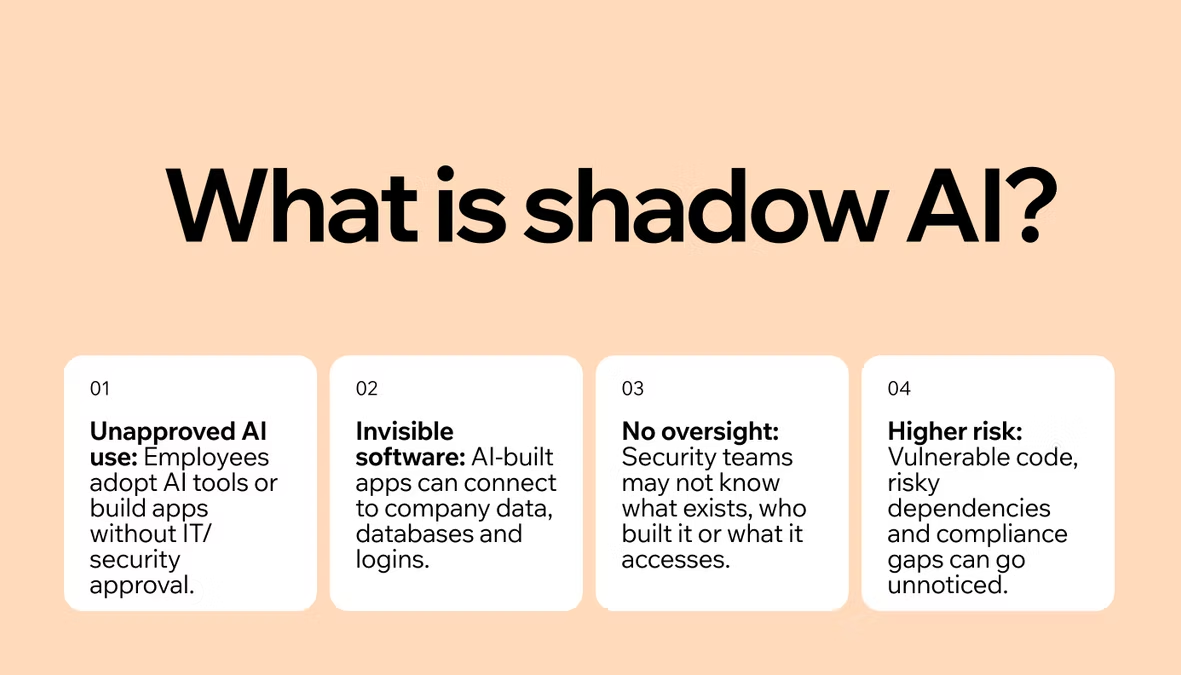
Shadow AI is any AI tool, model or AI-built application that people inside an organization use or create without the knowledge or approval of IT and security. It is the AI version of shadow IT: useful technology adopted from the bottom up, faster than governance can keep track of it.
The scale is not hypothetical. Gartner projects that by 2030, more than 40% of organizations will experience a security or compliance incident tied to shadow AI.
A Cisco survey found that 60% of organizations are not confident they can even detect unapproved AI use inside their networks.
Similarly, the Wiz AI Security Readiness Report found that 25% of organizations don’t know which AI services are currently running in their environments, making it difficult to identify and manage unauthorized AI use. The gap is not that teams are careless. It is that the tools moved faster than the controls.
Why AI app builders change the equation
Shadow IT used to mean an unapproved SaaS subscription or a spreadsheet doing a job no one signed off on. AI app builders raise the stakes, because now the thing being created is software. A marketer or an analyst can describe what they want and have a real, working app a few hours later, complete with a database, a login and access to company data.
That speed is the point, and it is worth protecting. The problem is what happens next. An app built this afternoon can be live before anyone in security knows it exists. Multiply that across a few hundred employees and you have a category of software that runs on your data but was never measured against your standards.
The instinct is to pick one of two bad options: lock everything down and lose productivity, or let it run and lose visibility. Neither is necessary.
How to govern the apps your teams build
Governing AI-built software is not about slowing builders down. It is about setting the rules once, so people build inside them instead of around them. In practice that means putting three controls in place at the workspace level:
- Control which integrations are allowed. Decide which external connectors any app in your workspace can use, and turn them on or off centrally.
- Define who can publish, and to whom. Set, by role, who can make an app live and at what visibility, so a private prototype does not become a public app by accident.
- Scan every app against your security policy. Check the code and its dependencies against the standard your security team already set, not a generic one.
The first two give IT a real answer to "what is connected and what is live." The third is where the security team's standard reaches the code itself. That last control is what our Wiz integration delivers.
How Base44 closes the shadow AI security gap
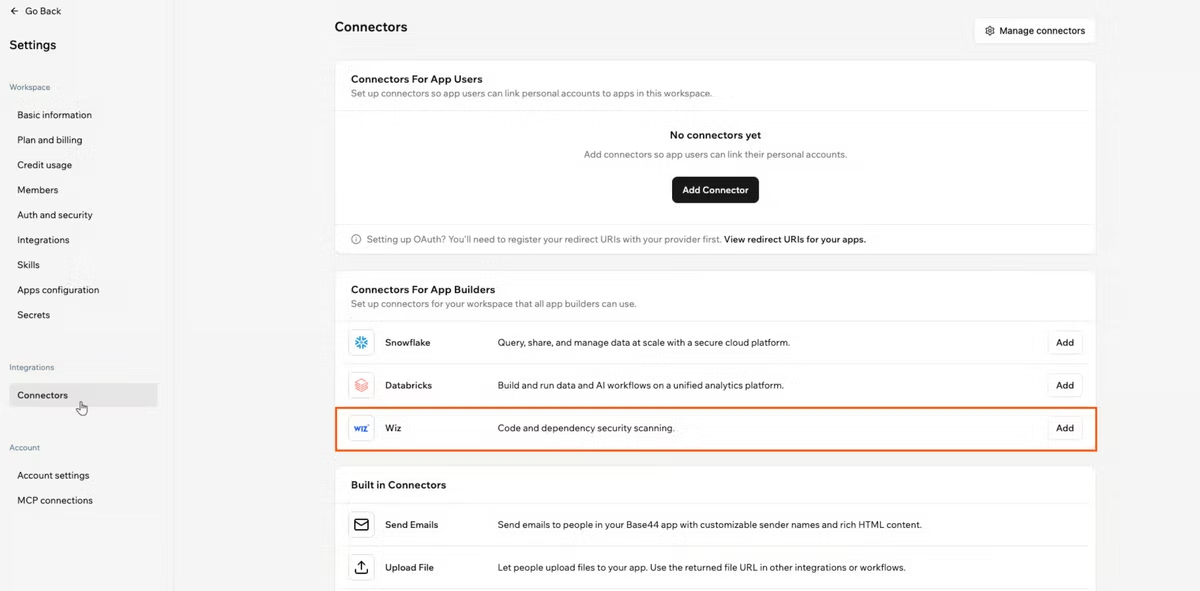
If your organization uses Wiz, you can connect it to Base44 so that scanning your app for vulnerabilities with Wiz also checks the app against your own Wiz policy. It looks at two things: vulnerable dependencies and risky code.
Findings show up right inside Base44, and builders fix them where they are working rather than switching to a separate tool. The full report flows back to the Wiz dashboard your security team already monitors, so an app built by a non-engineer is held to the same standard as everything else you run.
Wiz, now part of Google Cloud, is the platform many security teams already rely on. Connecting it means the apps your team builds are measured against a standard your organization already trusts, automatically, as part of the scan that was going to run anyway. Using Base44 integrations, this happens as part of the native workflow rather than an external add-on.
This is the difference between shadow AI and governed AI. The app a teammate built this week is not an invisible liability. It is software your security team can see, scan and stand behind.
"In the world of AI applications, building securely from the start is essential. That is why our integration with Base44 brings Wiz security policies directly into the development workflow, giving security teams visibility into AI applications while enabling builders to remediate risks in the tools they already use" - Oron Noah, VP Product, Extensibility & Partnerships, Wiz
To see how this fits into your stack, explore the Base44 backend.
The takeaway: what is shadow AI?
Shadow AI is what happens when building outpaces governance. The answer is not to stop people from building. It is to give security a way to see and govern what gets built, on the standards they already use. Set the guardrails once, scan against your own policy and your teams keep moving while your security team gets a real answer.
If your organization uses Wiz, here is how to connect it to Base44 and bring your own policy to every app your team builds.
Explore more Base44 integrations:
What is shadow AI FAQ
What is shadow AI?
Shadow AI is any AI tool or AI-built application used or created inside an organization without IT and security approval. It is the AI version of shadow IT, and it grows fastest where employees can build or adopt tools on their own.
Is AI-generated code secure?
AI-generated code can introduce the same risks as any code, including vulnerable dependencies and exploitable patterns. The way to manage it is to scan every app against your own security policy before and after it goes live, so issues are caught and fixed rather than shipped unseen.
How do you govern apps built with AI?
You govern AI-built apps by setting controls once at the workspace level: which integrations are allowed, who can publish and at what visibility and how every app is scanned against your security standard. That lets teams keep building while security keeps oversight. The same controls apply when someone on your team sets out to build an AI agent: approved integrations, the least access the job needs and visibility for security.
Related readings:
- Base44 app review
- Base44 and Stripe Projects
- Base44 backend & Brik
- Enterprise connector control and role-based publishing
What's the Base44 Wiz integrations?
It connects your organization's Wiz account to Base44, so a security scan checks each app against your own Wiz policy for vulnerable dependencies and risky code. Builders fix findings inside Base44, and the full report appears in your Wiz dashboard.